Physical Address
304 North Cardinal St.
Dorchester Center, MA 02124
Physical Address
304 North Cardinal St.
Dorchester Center, MA 02124
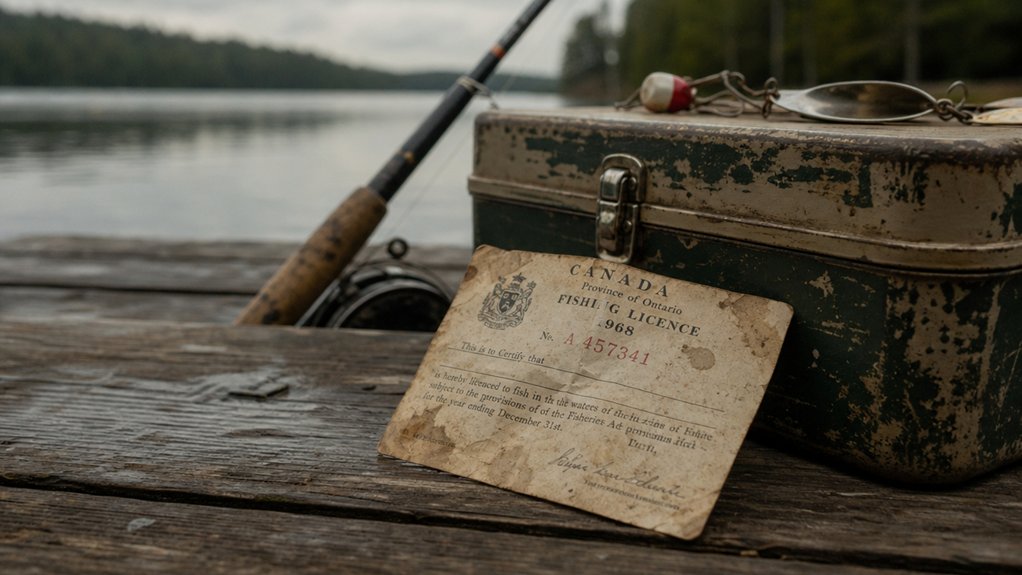
Fishing in Canada means a different license system for every province. Getting the right one sorted before you go is simpler than it sounds.
Canada’s fishing regulations are managed at the provincial level, which sounds simple until you realize it means thirteen different systems with thirteen different sets of rules, fees, and residency requirements.
The good news is that the license itself is straightforward to get. Online, in-store, same day. What takes a few minutes to sort out upfront is which license, for which water, in which province.
Getting that right before you head out keeps the focus on the fishing.
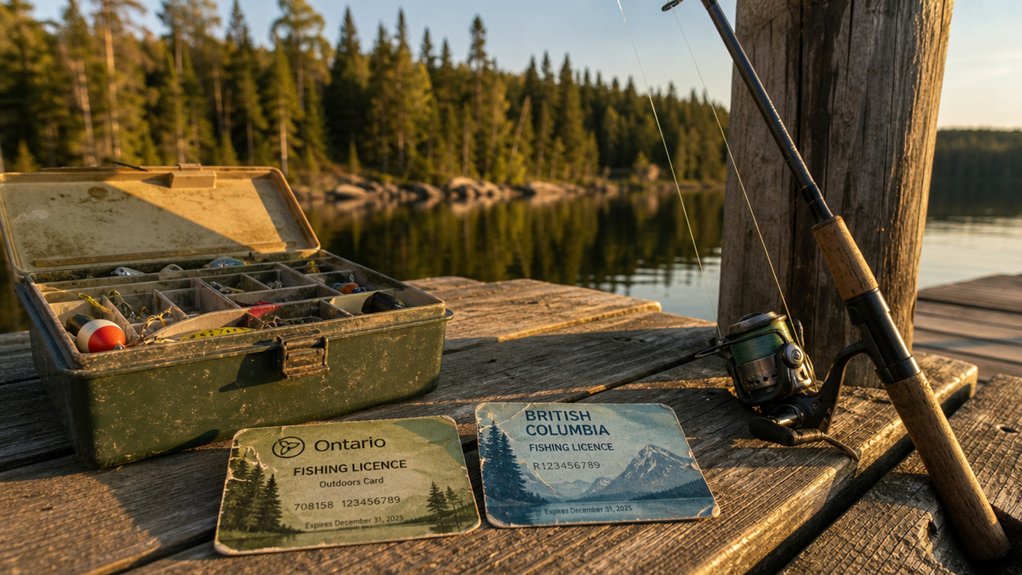
Before you grab your rod and head to the nearest lake, you’ll need to sort out the right fishing license, and Canada doesn’t make it a one-size-fits-all deal.
Each province sets its own license categories, splitting permits by water type, species, and who’s casting.
When planning a road trip across multiple provinces, keep in mind that you may need separate licences for each jurisdiction since your permit from one province won’t cover you in another.
Residency requirements matter here. Most provinces define residency as living in the province for at least six consecutive months before applying for a licence. Understanding these residency requirements helps you determine which pricing tier applies to your situation.
Non-residents pay more but get flexible options: daily, weekly, or seasonal passes that won’t tie you down. If you’re planning to fish in B.C. tidal waters, you’ll also need a federal DFO tidal licence purchased separately from any provincial freshwater licence.
You’ll also find youth, senior, and Indigenous exemptions that cut costs or waive fees entirely.
How much you’ll actually pay depends on where you fish, how long you plan to stay, and whether you’re a resident or visitor.
License fee comparisons reveal real differences. Residents typically pay $25–$45 CAD annually, while non-residents face $60–$120 CAD. Daily options run $10–$25 CAD, perfect if you’re passing through.
Seasonal pricing variations matter too. Species-specific tags add up fast. Salmon endorsements in BC tack on $15–$30 CAD.
Sturgeon permits? Another $20–$40 CAD. Species like walleye are covered by the standard freshwater licence in most provinces, but always check the species rules before you head out. Some provinces also require prerequisite cards or certificates, such as Ontario’s Outdoors Card, before you can even purchase a fishing licence. So familiarize yourself with gear basics and equipment needed for your chosen fishing method.
Seniors save 30–50% off standard rates. Kids under six? Usually free. Nobody’s getting locked out here. In Ontario specifically, residents and Canadians aged under 18 or 65+ can even use valid identification in place of a purchased licence.
Now that you know what a license costs, you need to actually get one. You’ve got options.
Online purchasing is the fastest route. Provincial government portals sell licenses 24/7, and you’ll get your e-license emailed immediately. Be sure to save your actual license document, since a receipt alone may not serve as valid proof when you’re out on the water.
Prefer in-person? Hit up Canadian Tire, Bass Pro Shops, or Cabela’s. Their systems connect directly to provincial databases. Local tackle shops and marinas work too.
In smaller communities across northern Ontario, Manitoba, and Saskatchewan, the local general store often serves as the authorized license vendor for the surrounding fishing area.
Fishing outfitters, resorts, and guide services also sell licenses on-site. When fishing in moving water environments, proper licensing ensures you’re compliant with regulations. Non-Canadian residents fishing in B.C. tidal waters should note that they must purchase licences from Independent Access Providers.
Before buying anywhere, familiarize yourself with licensing regulations specific to your province. Staff at any authorized vendor can walk you through the details.
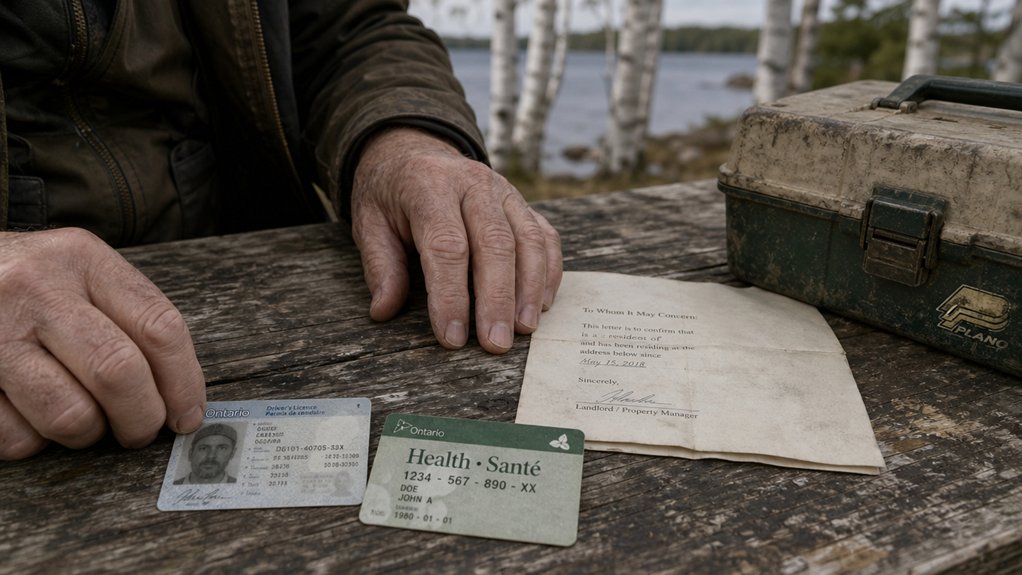
Getting your fishing license in Canada isn’t a walk-in-and-wing-it situation, you’ll need the right documents ready before you buy.
What to Bring
For residency verification, grab your provincial driver’s license or a recent utility bill. Most provinces define residency as living in the province for at least six consecutive months before applying for a licence.
In Ontario, Alberta, and British Columbia, residency is defined as at least six consecutive months of living in the province during the 12 months before applying for a licence.
For age eligibility, you’ll need a birth certificate or passport showing your full date of birth. Seniors 65+ and youth under 16 often qualify for reduced rates.
You’ll also need your Social Insurance Number for processing and a valid credit or debit card for payment.
Non-citizens should bring their Permanent Resident Card.
In Alberta, you must obtain a valid Wildlife Identification Number (WiN) before you can purchase any sportfishing licence.
Before heading out, use maps and apps to research your nearest fishing locations to ensure you’re purchasing a license for the correct region.
While it might seem like a minor oversight, fishing without a valid license in Canada can hit your wallet hard and follow you around for years.
Provincial fines range from $250 CAD in Ontario to $10,000 CAD in Alberta, and serious federal violations under the Fisheries Act can result in fines reaching $300,000 CAD or more for repeat or commercial offences.
Enforcement methods include conservation officer patrols, random boat launch inspections, and even undercover operations.
The consequences violations bring go beyond fines.
You’re looking at equipment seizure, license suspensions lasting up to five years, and potential criminal records. Proper planning before your trip, including obtaining all necessary licenses, helps you avoid these serious repercussions and ensures you’re prepared for your camping adventure.
Repeat offenses within five years typically double your penalties.
In Manitoba specifically, fishing for clams, mussels, or oysters without a license carries a $300 CAD fine, underscoring how even lesser-known fishing activities require proper licensing.
These penalties are grounded in a broader regulatory framework, including the Fishery (General) Regulations (SOR/93-53), which outlines federal compliance requirements and enforcement standards across Canadian fisheries.
The license costs less than a tank of gas. The fine for fishing without one does not. That math is easy.
Check your province’s portal, buy the right license for the water you are planning to fish, and keep a copy on your phone or printed in your gear bag. Most provinces accept the digital version as valid proof.
Canada has some of the best freshwater fishing on the continent, whether you’re chasing walleye in July or heading out on the ice in winter. The license is what gives you legal access to all of it.