Physical Address
304 North Cardinal St.
Dorchester Center, MA 02124
Physical Address
304 North Cardinal St.
Dorchester Center, MA 02124
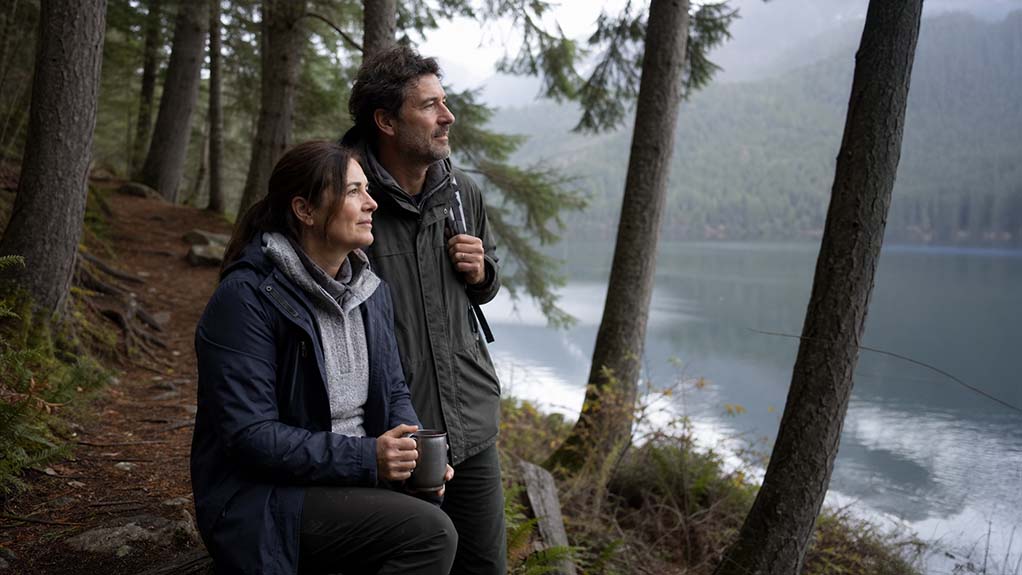
Somewhere around 43, something shifts. Canadians in their forties are heading back to hiking, paddling, and camping in numbers the parks did not expect.
Somewhere around 43, something quietly shifts.
It is not a crisis. It does not announce itself. But one Saturday morning you find yourself standing in the kitchen thinking: I used to go fishing. I used to hike. I used to actually be outside. What happened to that person?
Nothing happened to them. They just waited.
And more Canadians are finding that outdoor activities after 40 are exactly where that person has been all along.
Psychologists who study adult development have a name for what happens between 40 and 55.
They call it identity recalibration.
The career pressure has eased. The kids are becoming their own people. For the first time in years, there is real space to ask what you want to do with a free Saturday, and actually mean it.
Research on midlife development shows this period is less about loss and more about returning.
Adults in their 40s and early 50s consistently report a renewed interest in activities they abandoned in their 20s and 30s.
Not because they are nostalgic. Because they finally have time and permission.
That permission is the part nobody talks about.
We spend the middle decades of adulthood answering other people’s questions. What does the family need? What does the job require? What is the responsible choice?
At some point around 40, a different question surfaces. A quieter one.
What do I actually want?
For a lot of Canadians, the answer involves a fishing rod, a trail, or a canoe on flat water.
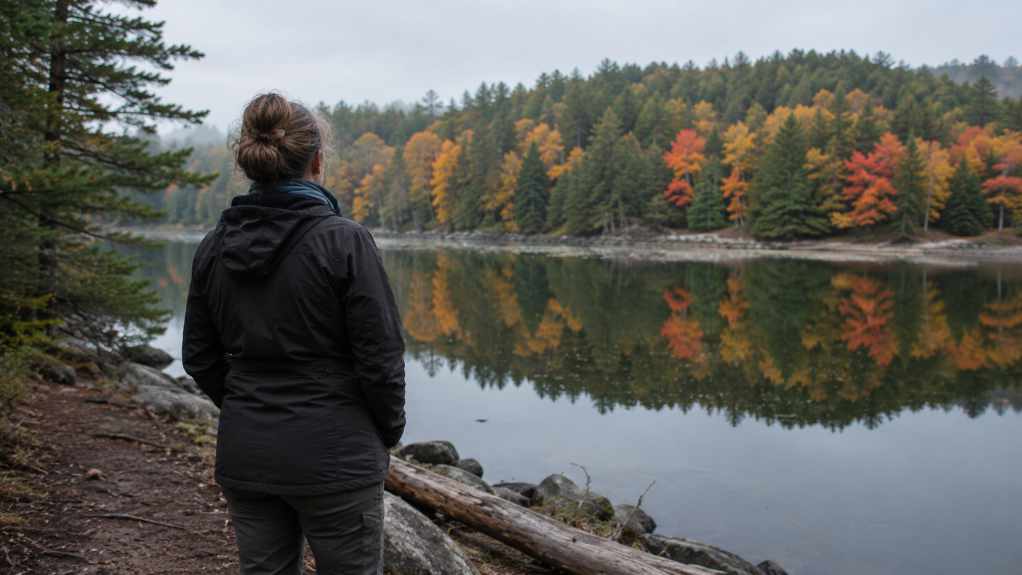
For those who have been away from it for a while, there is a guide specifically on how to start hiking again as a senior Canadian that covers pacing and gear. Canada makes the return easy to understand.
The lakes, the trails, the shoulder-season mornings in early September when the bugs are gone and the maples are starting to turn. Most Canadians grew up around this.
Parks Canada has reported rising attendance over the past several years. Adults in the 40-to-60 age range are among the fastest-growing visitor segments at national parks. Provincial parks across Ontario, British Columbia, and Quebec have seen similar patterns.
The numbers point at something real.
Part of it is physical. Research shows that outdoor activity, specifically time in natural settings, reduces cortisol levels more effectively than equivalent indoor exercise. Your nervous system responds differently to moving water and tree cover.
It always did.
But a bigger part of it is psychological.
Being outside is one of the few places where you are not managing anything. Not a project, not a relationship, not a reputation. You are just a person on a trail or in a boat, paying attention to what is directly in front of you.
That feeling does not go away just because you got older.
It just gets harder to reach.
Studies suggest that adults who return to outdoor physical activity after a long gap adapt faster than they expect.
The body has a kind of muscle memory for movement patterns. The mind has something similar for environments that once made you feel like yourself.
One reason Canadians are returning to fishing is worth naming here.
Available provincial fishing license data suggests that licenses issued to adults over 40 have grown steadily across the past decade in several Canadian provinces.
Fishing suits this life stage well. It is quiet. It is social when you want it to be. It requires attention, not athleticism.
The same is true for hiking.
Research published in environmental psychology journals points to restorative attention theory. The idea is that natural environments replenish the mental bandwidth that daily life depletes.
A two-hour walk in the woods is not just exercise. It is maintenance.
Gear questions are a common starting point — if you are unsure about basics like what sleeping bag you actually need for Canadian camping, that uncertainty tends to slow things down. Most people in their 40s and 50s have at least one version of the same excuse.
Too out of shape. Too long away from it. Too much gear to buy. Too far from where I used to be.
None of these holds up under pressure.
The fitness bar for most outdoor activities is lower than people assume. A beginner hike on a well-marked trail does not require training. A morning of fishing from a dock requires almost none.
You do not need to be ready. You need to show up.
Here are the real barriers, and what they actually look like:
The research on behavior change is clear on one point.
The biggest obstacle to returning to an activity is not physical. It is the story you tell yourself about why you cannot.
The people who return to outdoor activities after 40 almost never describe it as starting something new.
They describe it as remembering something.
If you have been quietly thinking about hiking in Canada or finally getting started with fishing, that thought is worth taking seriously.
It is not random. It is pointing at something you already know about yourself.
The trail will be there Saturday morning.
So will you.