Physical Address
304 North Cardinal St.
Dorchester Center, MA 02124
Physical Address
304 North Cardinal St.
Dorchester Center, MA 02124
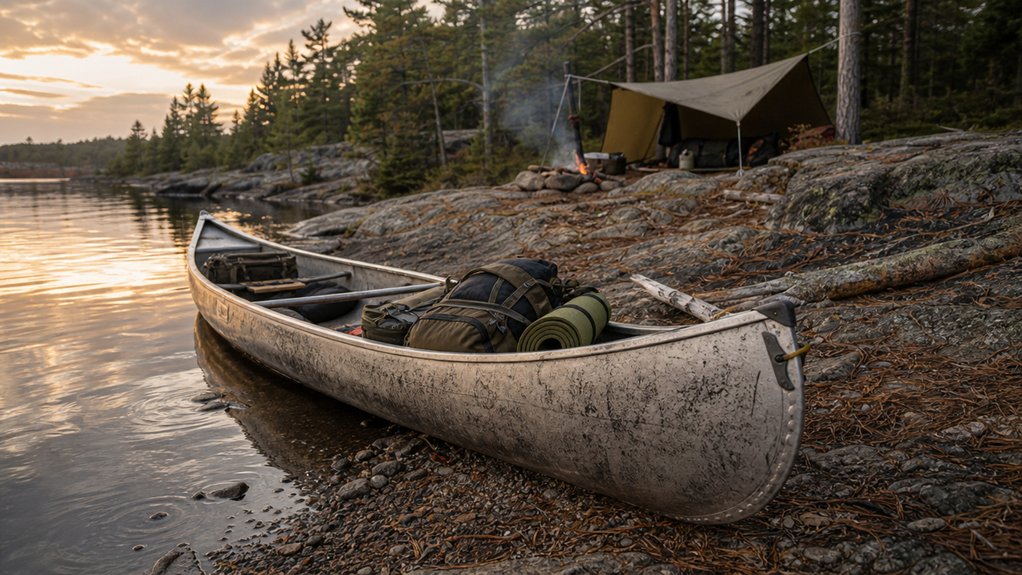
The first morning on a canoe camping trip goes one of two ways. Here is how to make sure yours is the good one.
This post contains affiliate links. We may earn a small commission if you purchase through these links, at no extra cost to you.
The first morning on a canoe camping trip usually goes one of two ways. Either the planning holds and the day feels manageable, or something was underestimated and the portage feels twice as long as the map said.
Canoe camping in Canada is one of the most accessible backcountry experiences available. The parks are well-documented, the routes are established, and the equipment is rentable at most entry points. The gap between wanting to go and planning your first multi-day canoe route is smaller than most people think.
A 1–3 night trip on a familiar lake is the right entry point. Build from there.
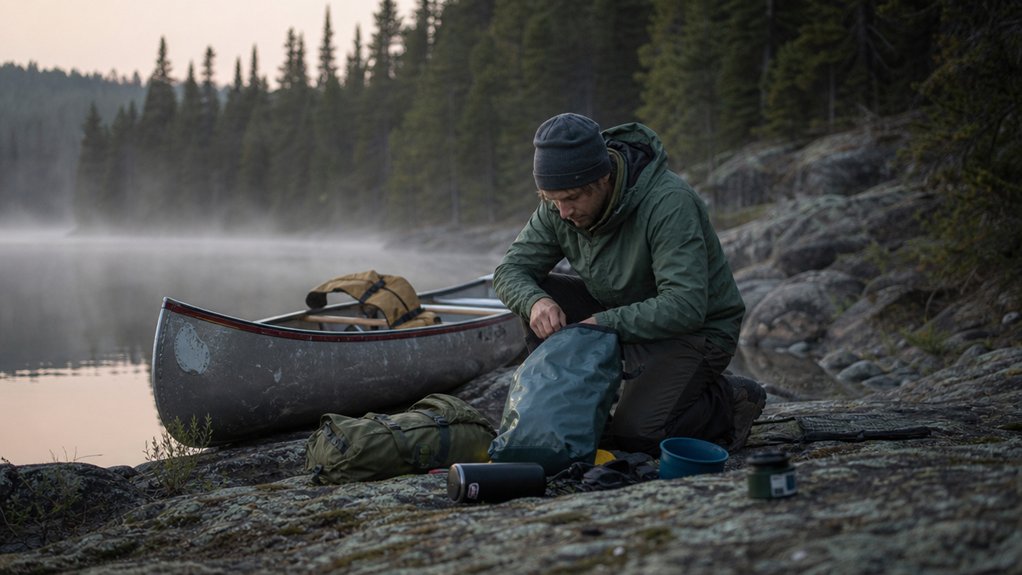
Your first canoe camping trip in Canada will test muscles you didn’t know you had. Expect soreness within the first two days as your body adjusts to sustained paddling techniques. You’re engaging your core, arms, and legs for 4-8 hours daily. Most paddlers hit their stride by day four.
Campsite selection takes longer than you’d think. Budget 2-3 hours after paddling to find a solid spot. In parks like Killarney, reservations are campsite-specific, so you’ll need to book an exact site for each night before you even hit the water. Mastering basic paddling techniques before your trip will help you conserve energy and make campsite hunting less exhausting.
You’ll burn 3,000–4,500 calories on an active paddling day, depending on distance, portages, and conditions, so pack accordingly. Rain hits 30-40% of camping days. That’s not bad luck, that’s just Canada. Since there’s no buffer out in the backcountry, consider getting wilderness first aid training before your first trip.
July and August deliver the warmest, most stable conditions. Plan for 10–20 km daily, at roughly 3–5 km/h.
Peak summer months offer the best conditions – but pace yourself wisely and plan for realistic daily distances.
In northern Ontario and along Quebec’s canoe routes, afternoon winds can build quickly on open lakes, making morning departures both faster and safer.
Build 20–30% buffer time into your schedule for weather delays. Consider packing essential camping gear that can withstand unpredictable weather patterns common to Canadian waterways.
For beginners, an ideal trip length of 1–3 nights keeps the experience manageable and enjoyable. At destinations like French River Provincial Park, site-specific reservations can be made up to five months in advance, so booking early is essential for securing your preferred campsites.
Freedom requires flexibility.
Before you obsess over route planning or paddle technique, you need to get your gear right, because the wrong equipment on a remote Canadian lake isn’t an inconvenience, it’s a safety problem.
Smart gear selection starts with four non-negotiables:
For packing tips, think waterproof. Organize your gear by waterproofing individual items and grouping them into gear categories that fit logically within your canoe’s layout to maximize space and accessibility.
Dry bags protect food, maps, and sleeping bags during crossings.
Roll-top dry bags in 10L and 20L sizes cover most load-out scenarios for a multi-night route. If you need to pick some up before your trip, you can find options on Amazon.
A satellite communicator should also be considered critical safety gear for its SOS capability in remote areas.
A compact satellite communicator is the single piece of gear that extends your self-rescue options further than anything else in the pack. Worth checking what’s available — Amazon carries a range of options.
Before heading out, mark evacuation spots and landmarks on your map so you have a clear emergency plan if conditions change.
Freedom means preparation, not improvisation.
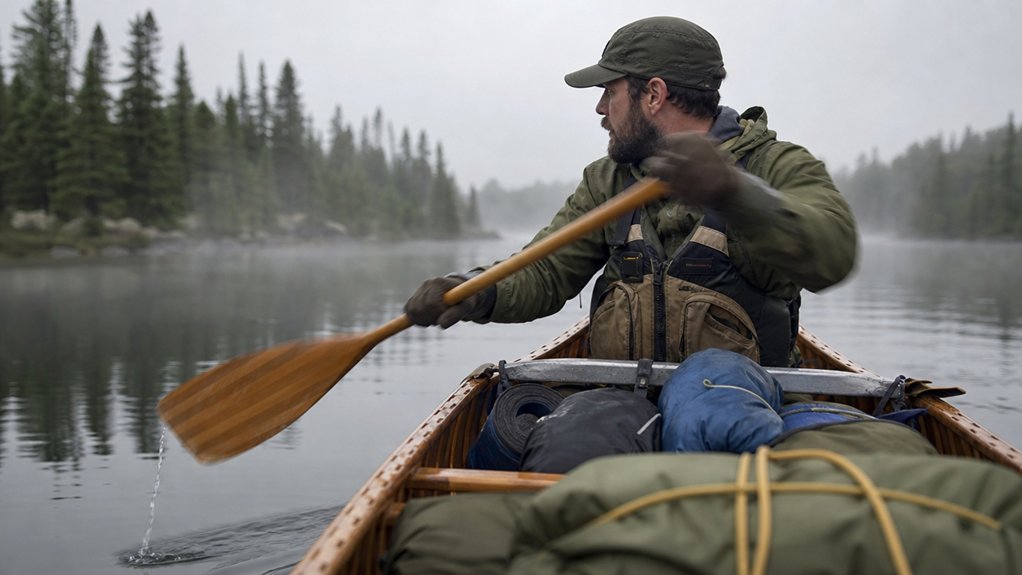
Canadian Shield trails run 0.5 to 2 kilometers between waterways. Pack heavy items center-mass and follow painted blazes through the forest. Wearing proper footwear with good traction and ankle support helps prevent slips on rocky or uneven portage terrain. Understanding lake safety fundamentals will help you navigate these wilderness routes with confidence.
In Algonquin, Killarney, and Quetico, portage trails are well-marked, but in more remote northern parks, shorter connector routes require careful map attention to stay on track.
Making multiple trips burns 40–60% more energy, so travel light when you can.
Mastering essential paddle strokes like the forward stroke for propulsion and the J-stroke for solo paddling will help you maintain direction efficiently between portages.
While Canada’s backcountry feels peaceful from the seat of a canoe, the risks are real: cold water, unpredictable weather, and wildlife that didn’t read your trip itinerary.
Freedom demands responsibility, so pack smart.
Pack for the trip you are taking, not the trip you are imagining. A 1–3 night route on a well-mapped lake system is a full canoe camping experience. It does not need to be the Yukon to count.
Get the gear right, file a trip plan, and go in the shoulder season when the lakes are quieter and the bugs are manageable. Most of what you will learn cannot be taught before you go.
Canada has more canoe routes than most paddlers will ever cover. Start with one.