Physical Address
304 North Cardinal St.
Dorchester Center, MA 02124
Physical Address
304 North Cardinal St.
Dorchester Center, MA 02124
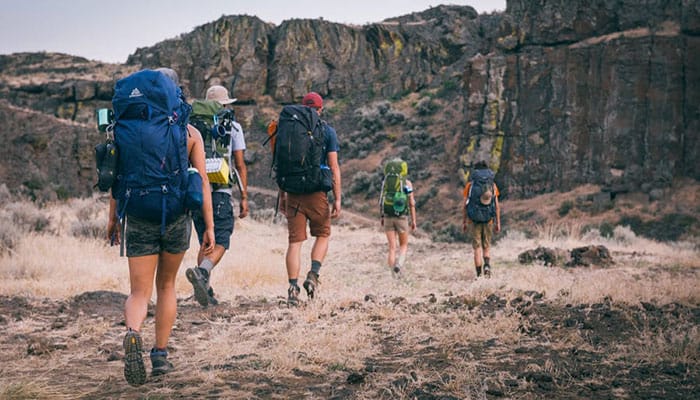
Wanting to hike more is the easy part. Finding someone whose pace, ambitions, and schedule actually match yours is the harder problem to solve.
This post contains affiliate links. We may earn a small commission if you purchase through these links, at no extra cost to you.
Wanting to hike more is the easy part. Most people figure that out quickly.
The harder part is finding someone to go with. And that part gets less attention than it deserves.
A lot of adults in their 40s and 50s find themselves in a social circle where nobody is particularly interested in being outside on a Saturday morning. Friends are busy. Partners have other ideas. The outdoor community can feel like it already belongs to people who have their group sorted.
Figuring out how to find a hiking partner in Canada is a practical problem. This article treats it that way.

One of the most reliable places to start is Meetup.com, which has active hiking groups in most Canadian cities. Search for hiking groups in your city and filter by activity level. A single group in Toronto or Vancouver may have thousands of members and organize multiple hikes every weekend at different fitness levels.
Smaller cities are less predictable but worth checking.
The format suits people looking for a hiking partner because the commitment is minimal. You show up for one hike, see how the group works, and decide from there.
Several Canadian provinces have organized hiking bodies that run group events and connect hikers. Hike Ontario maintains a club directory for the province. The Federation of Mountain Clubs of BC does the same for British Columbia.
These organizations attract committed hikers and are worth checking if you want something more structured than a Meetup group.
Regional hiking Facebook groups are active across Canada. Search for groups specific to your city or region. Groups like “Hiking Ontario” or city-specific groups for Vancouver, Calgary, and Montreal have thousands of members and regular activity.
They organize informal hikes, share trail conditions, and are generally welcoming to newcomers and people returning after a long gap.
Trail maintenance days through provincial parks and conservation authorities bring together people who are already regular hikers.
You spend a few hours doing useful work. You meet people committed enough to show up on a weekday morning with work gloves.
It is one of the more effective ways to find serious hikers without it feeling like a search.
Guided day hikes offered through outdoor companies and some provincial parks are a low-commitment way to meet people with similar interests and a similar willingness to show up.
You are not committing to a partnership. You are sharing a trail for a few hours with people who chose the same hike.
Similar fitness level matters more than similar personality, at least at the start. A significant mismatch in pace is the most common source of friction on a first hike. One person is always waiting. The other always feels rushed.
Before hiking with someone new, have a direct conversation about typical pace and which trails each person is comfortable with. It is a practical conversation, not an awkward one.
Some people want to talk the whole way. Some want long stretches of quiet. Neither is wrong. But a significant mismatch makes a long hike uncomfortable for both people.
This is harder to assess in advance than fitness level. A shorter first hike helps you find out without committing to a full day.
Someone who cancels frequently is a practical problem for hiking. You have planned a drive, a trail, a specific day. A last-minute cancellation wastes all of it.
You cannot assess this in advance. But it is one of the more important factors in whether a hiking partnership actually works over time.
Starting with low-commitment group hikes rather than one-on-one plans reduces the impact of a cancellation early on.
Relevant mainly for trail difficulty and weather decisions. If one person consistently wants to push further in deteriorating conditions and the other wants to turn back, that tension compounds over time.
Worth discussing before you are standing at a fork in the rain.
Choose a shorter trail than you think you need. A two-hour hike is enough to find out whether you work well together. If it goes well, extend the next one.
Discuss the plan beforehand. Before you meet at the trailhead, agree on start time, approximate distance, and what happens if one person wants to turn back early. Five minutes of conversation prevents most first-hike friction.
Split the navigation responsibility. Both people should know the route before you start. Look at the trail map together at the trailhead, or share a trail app.
For route options across Canada, the guide to hiking in Canada covers accessible trails by region.
Set clear meeting logistics. Parking at popular Canadian trailheads can be complicated. Agree on exactly where you are meeting, not just which park.
If you are heading into wildlife country, the guide to hiking safety in bear country is worth reading before you go.
Sometimes no partner is available and the trail is still worth doing.
Solo hiking in Canada is common and reasonable with a few adjustments.
If you need a communication backup for remote trails, you can browse satellite communicators on Amazon.
The solo experience is different from hiking with company, and many hikers find that the quieter pace helps them focus on why they hike in the first place.
For solo hiking in national parks, the guide to hiking in Canadian national parks covers planning and safety specific to those environments.
The hiking community in Canada is generally welcoming to newcomers and people returning after a long gap. Most group hikes organized through Meetup or provincial clubs are designed for mixed fitness levels and mixed experience.
A short hike with someone new is low stakes. It either works or it does not.
Both outcomes are useful.
If it works, you have a hiking partner. If it does not, you have still had a morning on a trail.
The barriers are mostly logistical, not social.
The logistics are solvable.