Physical Address
304 North Cardinal St.
Dorchester Center, MA 02124
Physical Address
304 North Cardinal St.
Dorchester Center, MA 02124
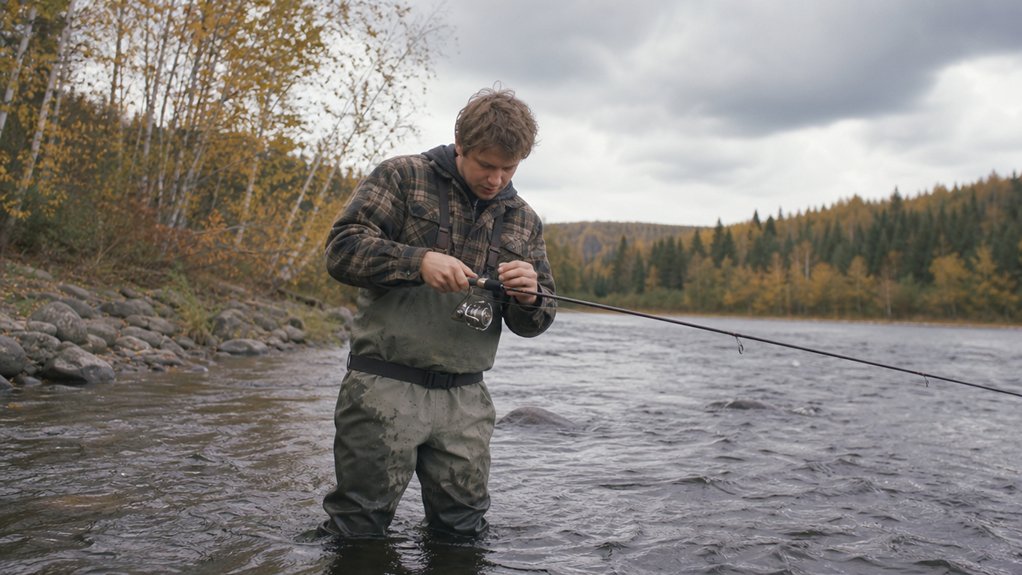
Rivers fish differently than lakes. The current changes where fish hold and how they feed. Most beginners learn that at the water.
This post contains affiliate links. We may earn a small commission if you purchase through these links, at no extra cost to you.
Rivers fish differently than lakes. The current changes where fish hold, how they feed, and how you need to present your bait. Get that wrong and you can spend a full morning on productive water and wonder why nothing is biting.
Canadian rivers have some of the best wild fish populations on the continent: walleye, steelhead, trout, pike, and salmon depending on the province and the time of year.
The basics take an afternoon to learn. A few of them take a season.
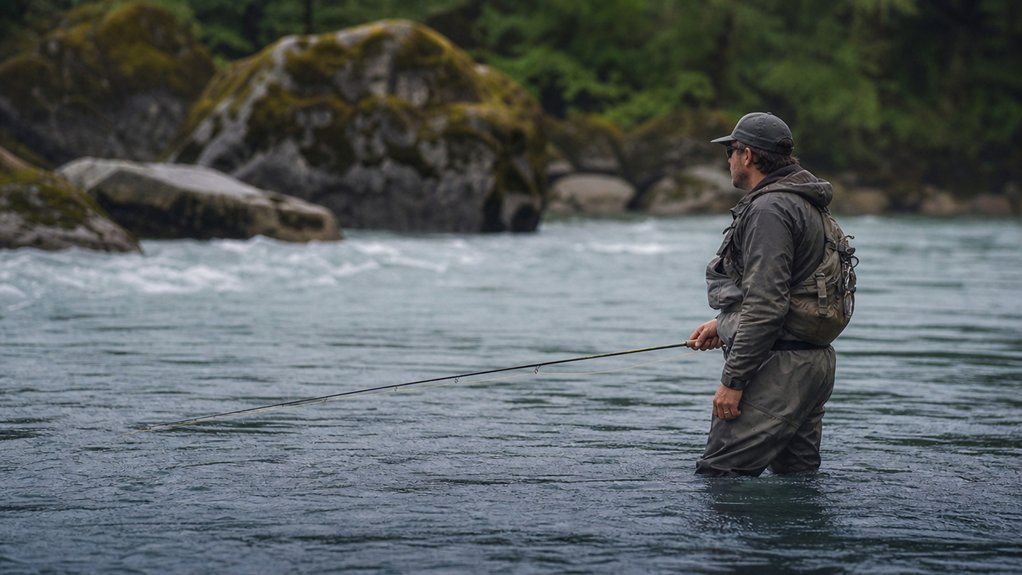
Temperature effects control fish behavior directly. Cold water slows metabolism, requiring adjusted angler techniques like smaller lures and slower retrieves.
Deep water features in particular are worth understanding: pools offer safety and stable temperatures for fish, making them especially productive holding areas during colder months.
Understanding gear basics helps you match your equipment to seasonal conditions and water types.
In rivers like the Bow in Alberta or the Restigouche in New Brunswick, fish holding positions shift with season, flow level, and water temperature, making water reading a practical skill, not just background knowledge.
Spool 3.6–5.4 kg (8–12 lb) test monofilament line and add a 60–120 cm (2–4 foot) fluorocarbon leader for stealth in clear water.
A spinning rod-and-reel combo in the 6 to 6.5-foot range handles the full range of river presentations without requiring a second setup. If you need to pick one up before your trip, you can compare options on Amazon.
Grab spinners in 3.5–7 g (1/8–1/4 oz) weights, plus hooks sized #8-#14. Use split shot weights for most bait fishing setups to get your presentation down to the fish.
A pre-sorted beginner tackle kit covers most river scenarios and removes the guesswork from first-trip setup. Worth checking what’s available — Amazon carries a range of options.
Ontario rivers hold a wide range of species, including chinook salmon averaging 6.8–11.3 kg (15–25 pounds), with exceptional fish occasionally exceeding 13.6 kg (30 pounds), steelhead, trout, bass, pike, and musky.
Don’t skip gear maintenance, respool line each season. When starting out in moving water, practice your casting technique to improve accuracy and distance.
Keep your gear in top shape. Respool your line every season to avoid break-offs and lost fish.
Also, check local regulations before you hit the water.
Once you’ve got your gear sorted, it’s time to talk about the single most important casting technique for Canadian rivers: casting upstream.
Here’s why it works: you’re positioning your bait *behind* the fish, letting current dynamics carry it naturally into their feeding zone. They never see you coming.
On rivers like the Thompson in British Columbia or the Miramichi in New Brunswick, this upstream presentation is the foundational technique that separates productive sessions from empty ones.
How to Do It
Among essential casting techniques, aim at a 45-degree angle upstream, about 7.5–12 metres (25–40 feet) out.
Keep your rod at 10-11 o’clock and mend your line immediately.
The current does the heavy lifting, you just manage the drift.
Dead drift. Watch your line. Let the river work. Before you head out, make sure you have the proper fishing license for the province and river system you’re planning to fish.
If you’re not getting bites, adjust depth in 6-inch increments to dial in exactly where the fish are holding.
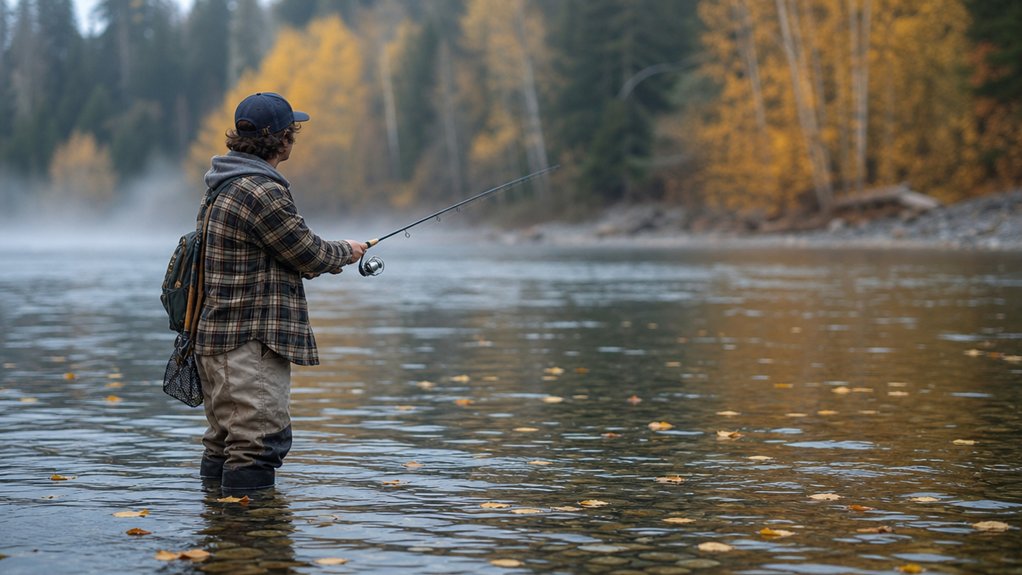
You’ll want to plan around fall or late spring for your first trip. Trout fishing is at its best from late April to late June, when bug hatches are plentiful and water temperatures are ideal.
On rivers like the French River, post-spawn Walleye action intensifies during mid to late May as water temperatures climb and fish become more aggressive in shallow, rocky areas.
Using maps and apps can help you identify promising fishing locations before you arrive at your chosen river.
These aren’t restrictions on your freedom.
They’re what preserves it.
Ontario’s catch and release guidelines require you to limit air exposure to 10 seconds from catch to release, ensuring fish survive to keep rivers thriving.
If a fish swallows the hook deep, cut the line rather than forcing it out to minimize tissue damage and give the fish a better chance of survival.
When fishing in remote Canadian rivers, always practice bear awareness to stay safe while handling your catch near the water.
Pick one river you can drive to in under two hours. Fish it in late spring or early fall when conditions are good and crowds are manageable. Cast upstream, watch your line, and let the current do the work.
The first few sessions are about learning that specific river: where the fish hold, how the current moves at different depths, what presentations actually work there. Those habits transfer. The specific knowledge builds from there.
Canada has thousands of fishable rivers. Start with one. Go back twice.