Physical Address
304 North Cardinal St.
Dorchester Center, MA 02124
Physical Address
304 North Cardinal St.
Dorchester Center, MA 02124
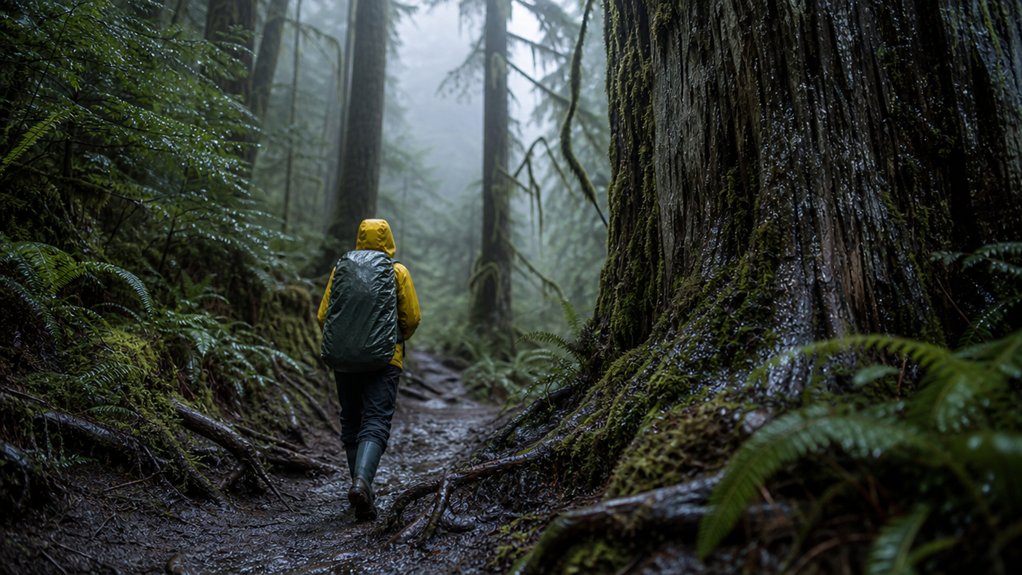
Hiking in Canadian rain is comfortable with the right gear and trail choices. A few simple decisions before you head out make the difference.
This post contains affiliate links. We may earn a small commission if you purchase through these links, at no extra cost to you.
There’s a version of hiking in the rain that’s genuinely good. The trails are quiet, the colours are vivid, and the air smells like it’s been scrubbed clean. Then there’s the other version, where the wrong jacket has soaked through by kilometre two and your feet have been wet since the parking lot.
The difference between those two experiences is almost entirely gear and a handful of decisions made before you step out of the car. Canadian rain doesn’t have to mean a miserable day on the trail, but it will if you treat it the same as a dry one.
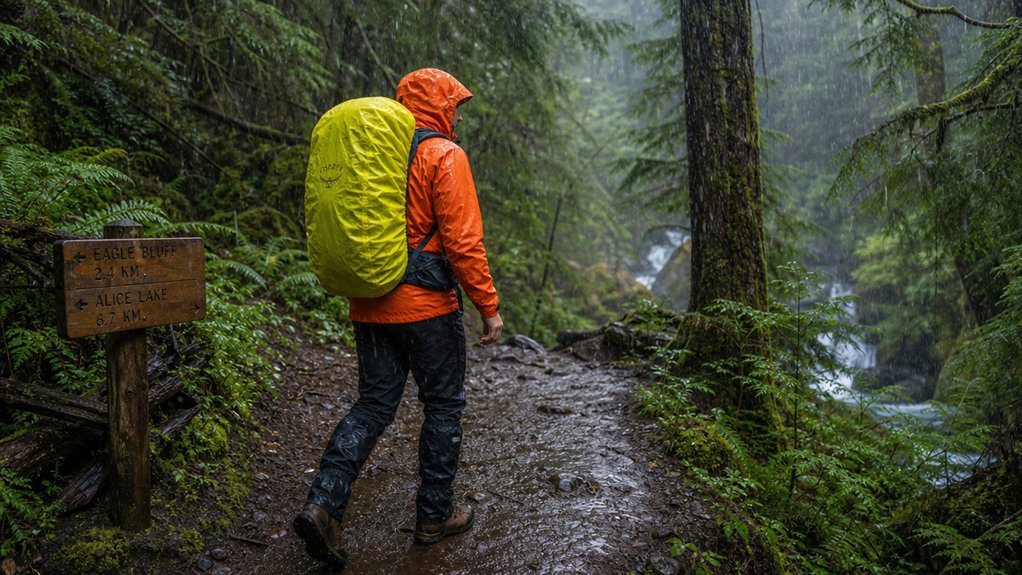
When hiking in Canadian rain, what you wear can make or break your trip. Your rain gear starts with a solid three-layer system.
First, ditch the cotton long underwear; it holds moisture and gets cold fast. Choose polyester or merino wool instead.
Second, add a fleece jacket as your mid-layer for insulation.
Third, your waterproof jacket is your shield. Look for adjustable hoods and breathable fabric. This lets sweat escape while keeping rain out.
Good waterproof hiking boots with strong traction complete your setup.
In winter conditions, ensure your layers provide adequate warmth beneath your rain jacket, as trail conditions in Canada can become treacherous when wet.
Check the weather forecast before heading out, so you stay dry and move freely all day.
If you don’t have one yet, there are plenty of waterproof hiking rain jackets on Amazon.
Finally, regular maintenance keeps rain jackets performing.
Rewash and reapply water repellent periodically, because breathable gear that’s clogged with grime won’t keep you dry for long.
Rainy hikes demand smart layering from the ground up:
Plan around drier weather when possible. If hiking with a dog, ensure your dog is properly prepared for wet conditions by drying their paws and coat frequently to prevent discomfort and maintain safety on slippery terrain.
If you need to pick one up before your trip, you can compare waterproof hiking gaiters on Amazon.
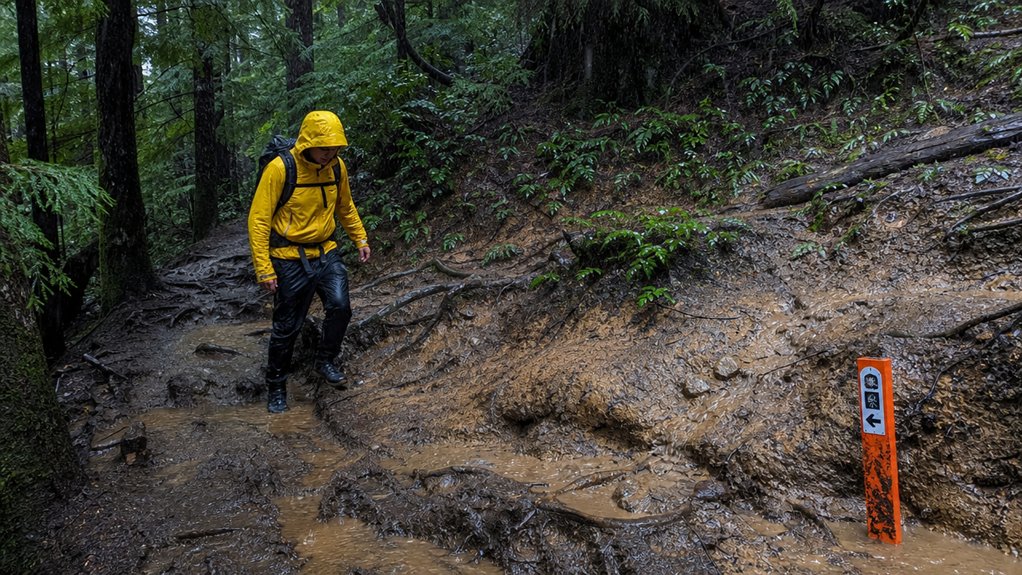
Heavy rain turns some trails from pleasant walks into genuine hazards, so knowing which ones to skip can save you from a miserable, or dangerous, day out.
In the Canadian Rockies, avoid trails near rivers or lakes where flooding hits fast. Skip steep, rocky routes like Little Lougheed, they get dangerously slippery quickly.
Narrow canyon trails carry real flash flood risk, so choose open alternatives like Bourgeau Lake instead.
Higher-elevation trails mix rain with snow, creating brutal conditions; Boom Lake keeps things manageable.
Before heading out, always check Parks Canada for current trail conditions. When planning your hiking visit, understanding how weather impacts different terrain types will help you make safer decisions. Heavy rain changes everything, plan accordingly.
Watch for these urgent signs:
Stay on marked trails.
Getting lost compounds every danger.
Act decisively, not frantically.
If you encounter wildlife on the trail, familiarize yourself with bear spray use and proper safety protocols before heading into remote areas.
Rain hiking in Canada rewards the prepared. If your jacket has a waterproof rating and your boots have been reproof’d this season, you’re ahead of most people on the trail. Add gaiters if you’re heading into anything with long grass or mud, and you’ve covered the main failure points.
The bigger discipline is the trail selection decision. When a forecast shows heavy rain, the answer isn’t always to stay home, but it does mean choosing open terrain over canyons, forest paths over riversides, and having a clear turnaround plan before you start.