Physical Address
304 North Cardinal St.
Dorchester Center, MA 02124
Physical Address
304 North Cardinal St.
Dorchester Center, MA 02124
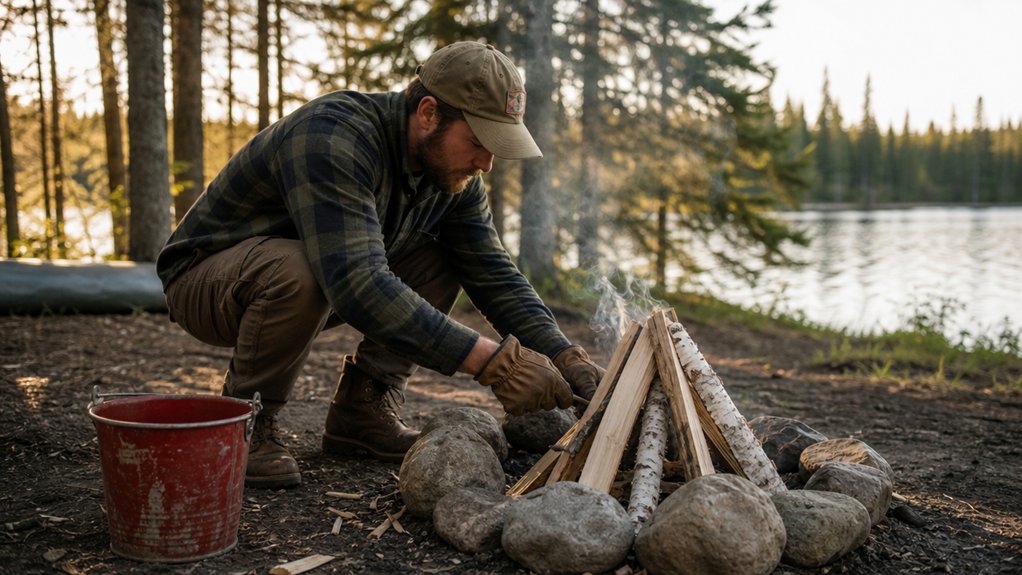
Campfires are often allowed in Canada, but only in designated fire pits and only when no fire ban is in effect.
Campfires are often allowed in Canada, but the rules depend on where you are and current fire conditions. In many parks, you may have a campfire only in a designated fire pit or firebox, and only when no fire ban or local restriction is in effect.
These rules can change quickly, sometimes before your trip begins and sometimes while you are already camping. Permit requirements, fire restrictions, and penalties also vary between provinces, territories, and park systems, so it is important to check local rules before lighting a fire.
Breaking fire rules can lead to serious fines. For example, Parks Canada materials say illegal burning in a national park can lead to fines of up to $25,000, while provinces may set different penalties under their own laws and regulations.
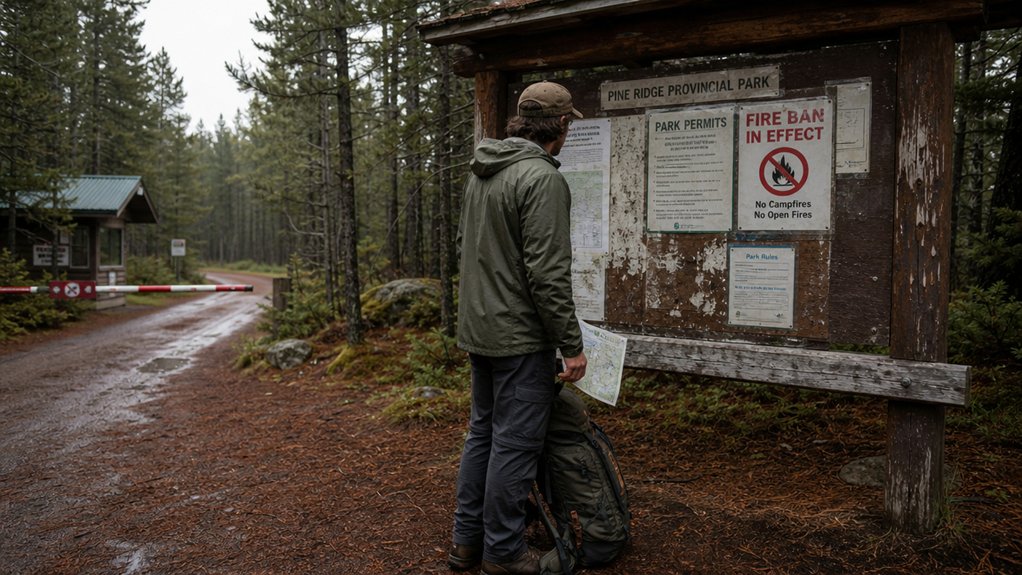
Before you even think about striking a match, you need to check whether campfires are actually allowed where you’re headed.
Canada’s campfire regulations shift fast, especially between July and September, when provinces like Alberta and British Columbia activate fire bans based on drought conditions.
Visit the Parks Canada website or your provincial forestry site for daily fire danger ratings.
In Ontario, for example, a fire permit is needed for burning wood, brush, leaves, and grass during fire season which runs from April 1 through October 31.
In cases of extreme fire hazard, Ontario may also declare a Restricted Fire Zone, which temporarily prohibits all outdoor fires, including campfires, unless specifically permitted.
Most parks require a permit, and the permit application process is straightforward: campground location, dates, and number of campers. Always follow safe campfire building techniques to minimize fire risk when your permit is approved.
Fines for violations vary and can be substantial. Freedom is great, but don’t finance it with penalties.
A safe campfire starts with the right location. In Canada, the exact rules vary by province, park, and fire conditions, but the basic safety principles are similar.
Start with the site itself:
Just as important is what to avoid. Grass, leaves, pine needles, roots, and low branches can all help a fire spread faster than expected:
For extra safety, choose a spot sheltered from wind. If possible, reuse a previously used campfire site. It is also smart to learn how to choose a campsite before building a fire.
Proper firewood preparation gives you freedom to relax, not babysit flames. To avoid spreading insect and plant diseases, always purchase firewood locally rather than transporting it from other areas.
In British Columbia and Ontario, moving firewood across regional boundaries is a known pathway for invasive species like the emerald ash borer, and many parks now enforce the local-purchase rule at entry.
Check your campsite’s fire safety regulations before igniting your wood to ensure compliance with local guidelines.
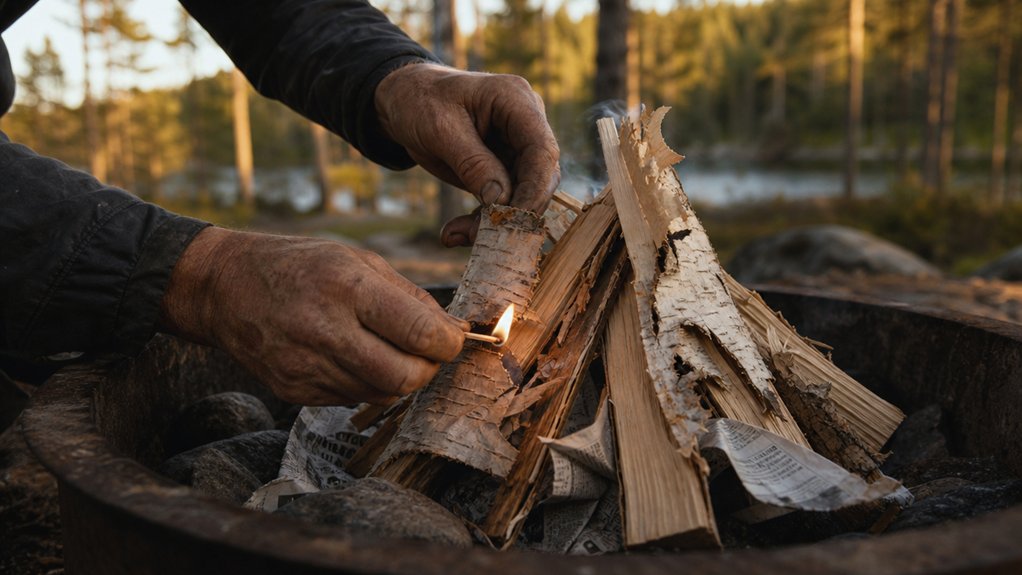
Next, mix mineral soil into the ashes with a shovel, creating an oxygen barrier.
In northern Ontario, Quebec, and Manitoba, where forest floors contain deep organic layers, ground fires can smoulder unseen well after a campfire appears extinguished.
Among proven extinguishing techniques, the hand test seals the deal: hold the back of your hand six inches above the ashes. Feel warmth? Add more water.
Budget 15-20 minutes for this process. If the ashes are too hot to touch, the campfire is too hot to leave unattended. Proper campfire management is essential for enjoying outdoor recreational activities responsibly across Canada’s diverse landscapes.
Canadian regulations require cold-out compliance, fines hit $10,000 CAD.
Before walking away, pour generous amounts of water over the entire fire area and stir the ash thoroughly with a stick or shovel to ensure no embers remain hidden.
Check the ban status before you go. That takes two minutes and costs nothing. Getting caught in a restricted zone with an active campfire costs considerably more.
The rest follows a short sequence: clear the ground properly, source wood locally, keep the fire manageable, and extinguish until it is cold. None of it is difficult. All of it matters.
Canada’s dry summers and variable wind make fire conditions unpredictable. Following the basics is not overcaution. It is what keeps the backcountry open for everyone.