Physical Address
304 North Cardinal St.
Dorchester Center, MA 02124
Physical Address
304 North Cardinal St.
Dorchester Center, MA 02124
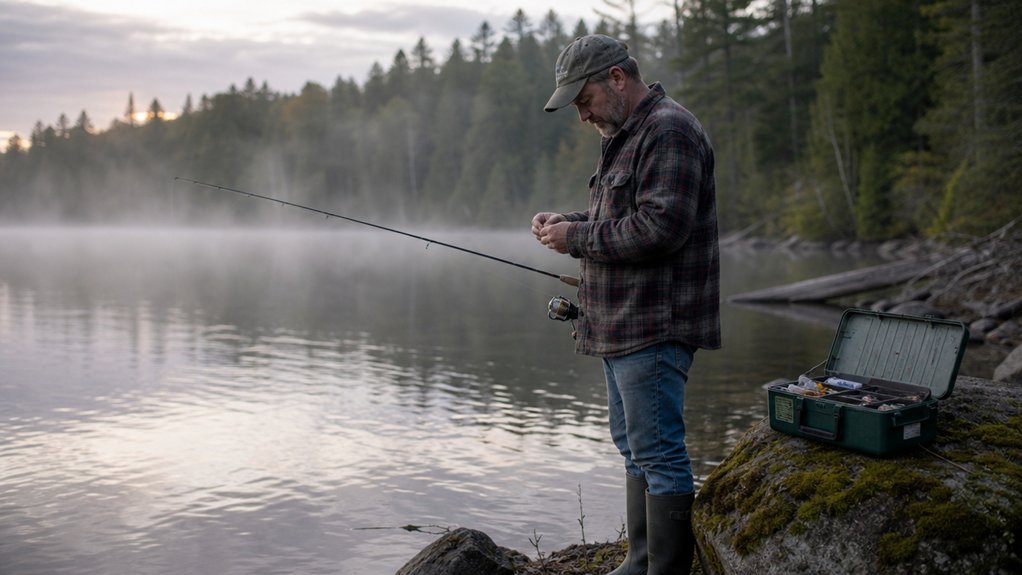
Most first-timers show up at the water with gear they barely understand and a plan to figure it out on arrival. There is a better way.
This post contains affiliate links. We may earn a small commission if you purchase through these links, at no extra cost to you.
Most first-timers show up at the water with gear they barely understand and a plan to figure it out on arrival. That works fine for the first hour. Then the fish aren’t biting, the line is tangled, and the drive home feels longer than the drive out.
Fishing in Canada doesn’t require much to start. A license, a basic rod, and access to one of millions of lakes or rivers is enough to have a real day on the water.
The steps below cover what you actually need, in the order you need them.
Before you even think about casting a line into Canada’s legendary waters, you’ll need a fishing license, and yes, every province runs its own show.
Resident licenses typically run $30–$60 CAD annually, while non-residents pay $80–$150+ CAD.
Planning a Canadian fishing trip? Budget $30–$60 if you’re local, or $80–$150+ as a visiting angler.
Short-term passes start around $15 CAD for tourists who want flexibility.
License types include freshwater, saltwater, and species-specific options. You can buy online, at tackle shops, or through provincial park offices. In Ontario, you’ll also need to purchase an Outdoors Card before you can buy a fishing licence, except when getting a one-day licence. Most provinces require you to carry your license with you while fishing as proof of compliance.
Don’t overlook exemption rules: kids under 16 often fish free with a parent, and seniors usually get discounts. Keep in mind that a provincial fishing licence is not valid in national parks, so you’ll need a separate Parks Canada fishing permit if you plan to fish there.
First Nations members may qualify for treaty-based exemptions.
Three pieces of gear stand between you and your first Canadian catch: a rod, a reel, and a tackle box that isn’t a total disaster.
Spinning rods between 1.8–2 metres (6–6.5 feet) hit the sweet spot for beginners. Those rod lengths give you control without feeling unwieldy. Skip baitcasting reels for now; they’ll humble you fast. River fishing requires understanding current speeds and depths to position yourself effectively in moving water.
A rod-and-reel combo pre-spooled with monofilament lets you start fishing the same day without a separate rigging session. If you need to pick one up before your trip, you can find options on Amazon.
Grab a spinning reel with 3.6–5.4 kg (8–12 lb) line capacity instead. Spinning reels are the most popular type in Canada, thanks to their versatility, durability, and ability to make accurate long casts.
For tackle organization, stock hooks in sizes 4-10, split shot sinkers, and red-and-white bobbers. You can also add soft-plastic baits to your box, since they imitate natural prey and often come enhanced with flavors that attract fish.
A pre-loaded starter tackle kit removes the friction of sourcing each item separately and gives you a functional starting inventory. If you don’t have one yet, there are plenty of options on Amazon.
A $40-$150 CAD combo package gets you fishing tomorrow. That’s freedom, not a financial commitment.
The gap between owning gear and actually catching fish comes down to five skills: casting, reading water, choosing bait, setting the hook, and handling your catch.
Casting techniques worth learning first: the overhead cast for open water and the sidearm cast for windy days.
Practice on grass before you hit the lake. Understanding proper casting fundamentals will significantly improve your accuracy and distance when you transition to actual fishing conditions.
For bait selection, start simple. Live worms account for roughly 60% of beginner success.
In Canadian lakes and rivers, where perch, walleye, and trout are common targets for beginners, worms remain the most reliable choice across all seasons.
You don’t need a tackle shop’s worth of lures yet.
When you feel a bite, snap your wrist firmly and keep your rod between 45, 90 degrees.
That’s your fish.
The best times to head out are morning and evening, when fish are most actively feeding near the surface. Ontario’s Learn to Fish program can help you build these skills through a two-hour educational session that covers rigging, baiting, casting, and more with all equipment provided.
Where you fish matters almost as much as how you fish. Canada’s got over 2,400 lakes in Algonquin Provincial Park alone, many with rental equipment waiting for you.
Start with freshwater. Lake Ontario’s shore fishing gives you largemouth bass without needing a boat.
Deer Lake in British Columbia offers rainbow trout at manageable depths.
Want saltwater? The Gulf of St. Lawrence provides dock fishing for cod, no boat experience needed.
Connect with local fishing communities before heading out.
They’ll share current conditions and essential fishing safety tips you won’t find online. Use maps and fishing apps to research waterbodies before your trip to narrow down your options. Provincial urban fishing programs stock thousands of catchable-size trout into city ponds each year, making them an ideal starting point for beginners who want easy access and nearby amenities.
Before you go, use a simple research routine to select a waterbody, identify your entry point, and always save a backup access point in case your first choice falls through.
Once you’ve picked your spot, it’s time to figure out what this adventure will actually cost you.
Trip Duration Shapes Your Budget
A single day runs $100–$500 CAD, covering charter fees and basics.
In provinces like Ontario and British Columbia, guided day trips often include access to lakes that are difficult to reach without local knowledge.
Multi-day trips add $60–$250 CAD nightly for lodging plus $40–$100 CAD daily for meals.
Your trip duration determines whether you’re spending hundreds or thousands.
Cost Saving Tips That Actually Work
Freedom isn’t free, but it doesn’t require bankruptcy either.
For essential gear alone, a rod-and-reel combo, basic tackle, worms, and a provincial licence, you can get started for under $120 CAD, and that setup will last you for years. Keep in mind that annual resident licence fees range from as low as $23.00 CAD in New Brunswick to $42.00 CAD in Saskatchewan, so your province of choice significantly impacts your overall budget. Pairing your fishing adventure with other outdoor activities across Canada can maximize the value of your trip while exploring diverse natural landscapes.
A fishing license costs less than a restaurant dinner. A basic rod-and-reel setup runs under $150 CAD. With those two things and a provincial park nearby, you can be fishing by this weekend.
The fish don’t care if your cast is perfect. Neither should you, at first. Show up, figure out what works at that spot, and go again.
Canada has more fishable water than most anglers will ever fully explore. Pick one lake, get on it, and see what happens.