Physical Address
304 North Cardinal St.
Dorchester Center, MA 02124
Physical Address
304 North Cardinal St.
Dorchester Center, MA 02124
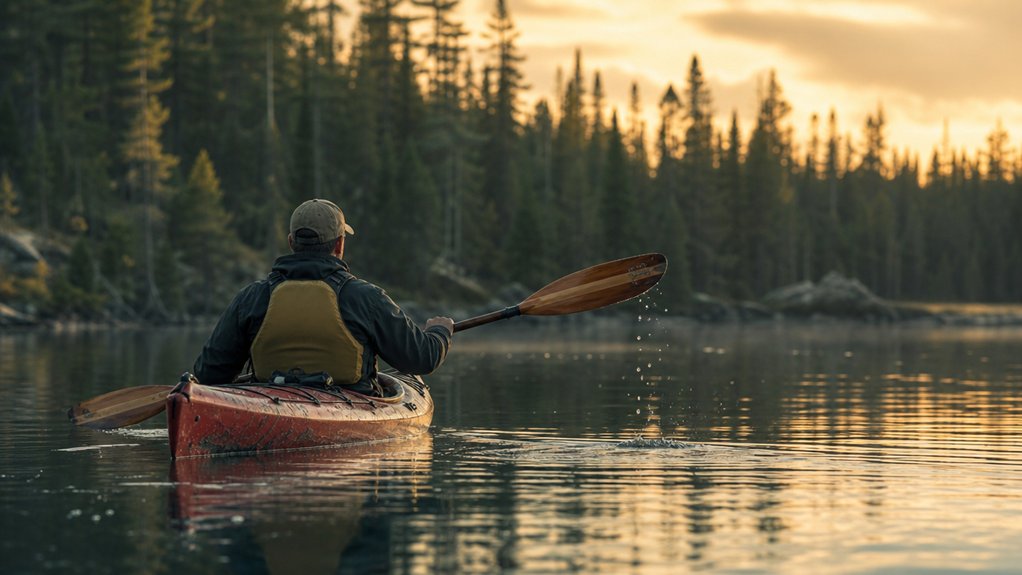
Canada has more lakes than the rest of the world combined. Getting on one for the first time takes less preparation than most people think.
This post contains affiliate links. We may earn a small commission if you purchase through these links, at no extra cost to you.
Canada has more lakes than the rest of the world combined. That statistic sounds like marketing until you pull a kayak out of the water at the end of a week-long paddle and realize you never saw the same shoreline twice.
If you want to take it further, the guide on how moving water changes kayaking technique is the natural next step. Lake paddling here doesn’t require a guide or an expedition budget. Most provincial parks have launch access, rental gear, and marked routes. You need a PFD, basic weather awareness, and a sense of where you’re going.
The guide below covers the practical side: gear, weather, safety, and how to choose your first lake.
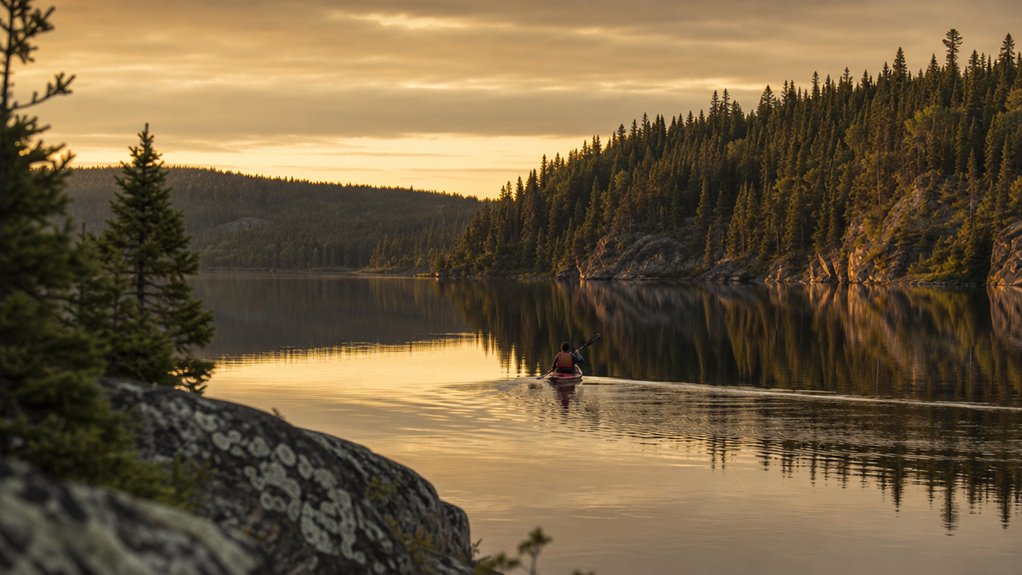
Connected waterway systems let you paddle 50+ consecutive miles without hitting a single road. With over 250,000 lakes scattered across Ontario alone, the options for exploration are practically endless.
In Ontario’s Quetico and the Lake Superior Provincial Park, established canoe routes stretch for weeks without requiring road transport, making them among the most continuous wilderness paddling networks on the continent.
When planning your trip, consider combining kayaking and camping to maximize your time on the water and immerse yourself fully in the Canadian wilderness experience.
The paddling season stretches from May through October, giving you a generous window to plan your adventure.
That’s real freedom.
Before you load up the car and head for open water, you’ll want a gear list that actually matches Canadian lake conditions, not some generic checklist pulled from a tropical kayaking blog.
Safety equipment comes first. You’ll need a PFD rated with at least 15.5 lbs of buoyancy, a whistle audible up to 1.6 km (1 mile), and a 15-metre (50-foot) throw rope. All PFDs and lifejackets must be Canadian-approved to meet legal requirements under the Small Vessel Regulations.
A Canadian-approved Type III PFD with front pockets provides both the legal buoyancy requirement and a practical place to store a snack or compass. If you need to pick one up before your trip, you can find options on Amazon.
Don’t skip kayak maintenance gear either. A repair kit with hull patches and a bilge pump clearing 7.5–11.4 litres (2–3 gallons) per minute keeps you moving. Organizing your gear strategically in the kayak ensures that essential repair items remain accessible without compromising weight distribution or stability.
Pack a wetsuit rated for 4–16°C (40–60°F) water, a marine GPS with offline maps, and dry bags rated for full submersion. Since Canadian lake water temperatures can be dangerously cold, choose clothing that insulates when wet to help prevent hypothermia in the event of an unexpected swim.
Submersion-rated roll-top dry bags in 20L and 30L sizes are sized for Canadian overnight conditions where hatches may take water during a self-rescue. If you don’t have any yet, there are plenty of options on Amazon.
Stay free out there by tracking these essentials:
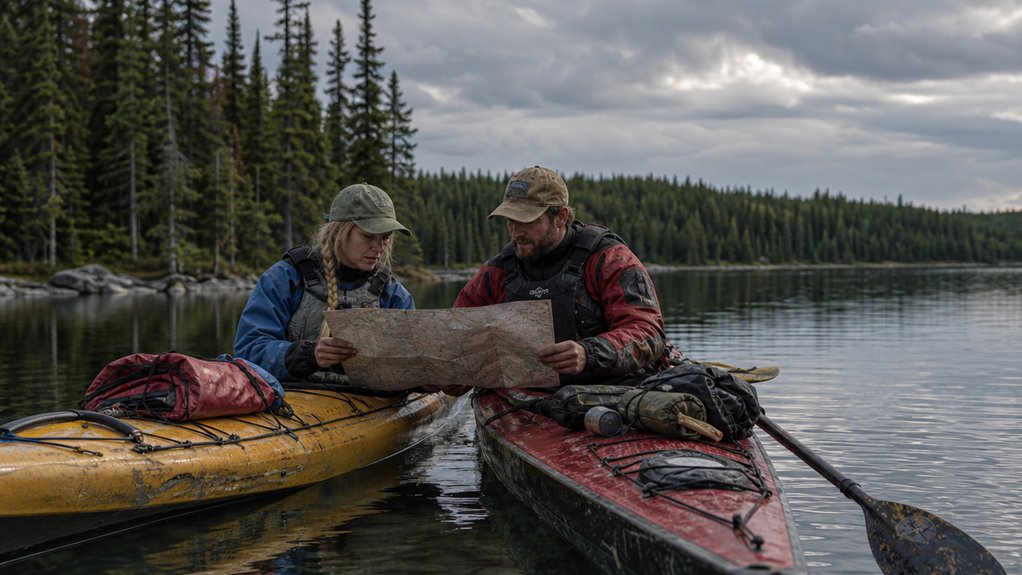
Wear your PFD. According to the Canadian Red Cross, wearing a PFD could prevent up to 85–90% of boating-related drownings in Canada.
That’s not a suggestion, that’s math.
Canadian lakes like Kejimkujik can be dark-water and rocky in the shallows, so always carry a heaving line, bailer, and noisemaking device as part of your safety equipment requirements.
In British Columbia’s Bowron Lake Canoe Circuit or Ontario’s Quetico, rescue response from remote locations can take several hours or longer, which is why a trip plan filed with a contact onshore is standard practice, not optional.
Before heading out, familiarize yourself with portaging techniques to safely navigate between water bodies and avoid exhaustion that compromises water safety.
Although Canada has over two million lakes to choose from, picking the right one for your first paddle comes down to four factors: your experience level, how far you’re willing to drive, how easy it’s to get your kayak to the water, and what the weather’s doing that time of year. The Muskoka region, for example, is a popular choice since it’s just two hours from the Greater Toronto Area.
Pick your lake like a pro. Match it to your skill, your schedule, and the season.
For smart lake selection, follow these beginner tips:
Canada offers diverse paddling opportunities across its regions, so research outdoor adventures in your province to discover hidden gems beyond the most popular destinations. Before heading out, always clean, drain, and dry all your equipment to prevent the spread of aquatic invasive species, which threaten the health of Canada’s freshwater ecosystems.
Check the forecast the morning you go, not the night before. Canadian lake weather, particularly on larger bodies like Lake Superior or Lake Huron, can shift faster than any 24-hour model predicts.
File a trip plan with someone onshore. Tell them where you’re putting in, where you plan to be by midday, and when to call for help if you don’t check in. That takes three minutes and is more useful than any piece of gear.
There are better lakes than the one you’re starting on. But the one you’re starting on is enough. Go.