Physical Address
304 North Cardinal St.
Dorchester Center, MA 02124
Physical Address
304 North Cardinal St.
Dorchester Center, MA 02124

Kayaking on moving water for the first time is about reading the river before you launch. Understanding currents and hazards changes everything.
This post contains affiliate links. We may earn a small commission if you purchase through these links, at no extra cost to you.
Moving water has a way of demanding your full attention in a way that flat water paddling simply doesn’t. You might be halfway through a perfectly competent forward stroke when the current shifts under your hull and suddenly you’re pointed sideways at a rock that wasn’t there a second ago.
The transition from lake kayaking to river kayaking is less about physical strength and more about reading what the water is doing ahead of you. Rivers communicate. Eddies, V-shapes on the surface, the way foam lines track the current, all of it is legible once you know the language. Your first time on moving water will be more enjoyable and a lot safer if you’ve done some reading before you launch.
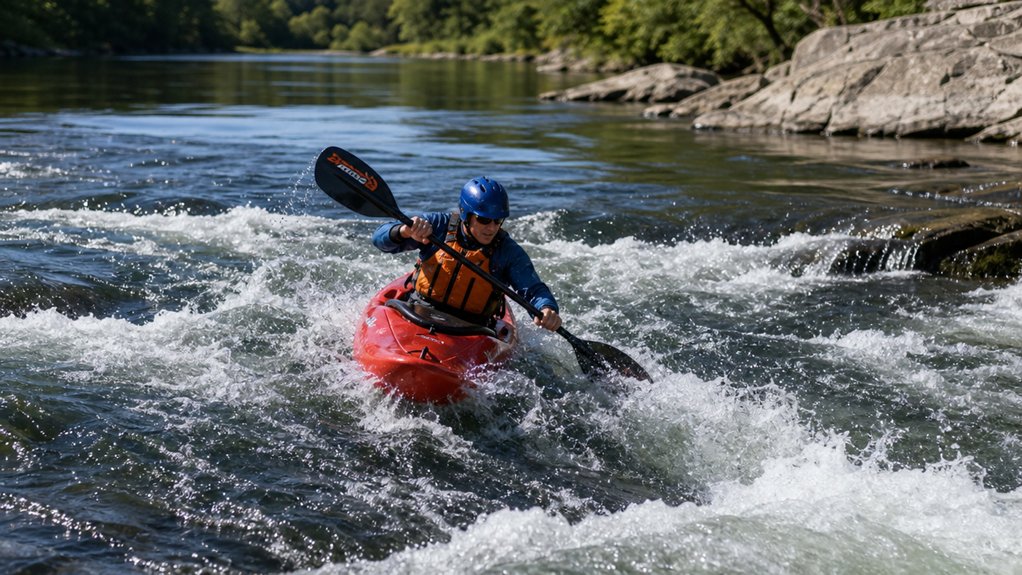
Moving water and flat water kayaking might look similar from the shore, but they’re two completely different sports. On flat water, your paddle stroke stays steady and predictable. Moving water changes everything.
Here’s what you’re dealing with:
Safety becomes a bigger priority because the river doesn’t wait for you to catch up.
You’ll need to read the water’s surface, anticipate changes, and respond fast. Before heading out on moving water, master the essential paddling techniques that form the foundation of safe kayaking.
Moving water rewards awareness, not just paddling strength.
Before you ever put your paddle in the water, you need to read the river. Scout the riverbank first, walk the shore, observe the moving water, and plan your route before launching.
Here’s what to look for:
Learning how to read a river helps you navigate safely and spot hazards before they surprise you. Proper gear organization in your kayak will keep essential safety items accessible for quick response to river conditions.
Take five minutes to observe. That time’s well spent.
Once you’re on the water, the current doesn’t just push you along; it actively changes how every stroke feels and performs. You’ll need to adjust technique constantly to maintain control.
Here’s what to expect:
Read the water patterns around you. Eddies and waves directly influence your paddle strokes. Understanding waterway safety principles will help you recognize hazardous currents and navigate around obstacles more effectively.
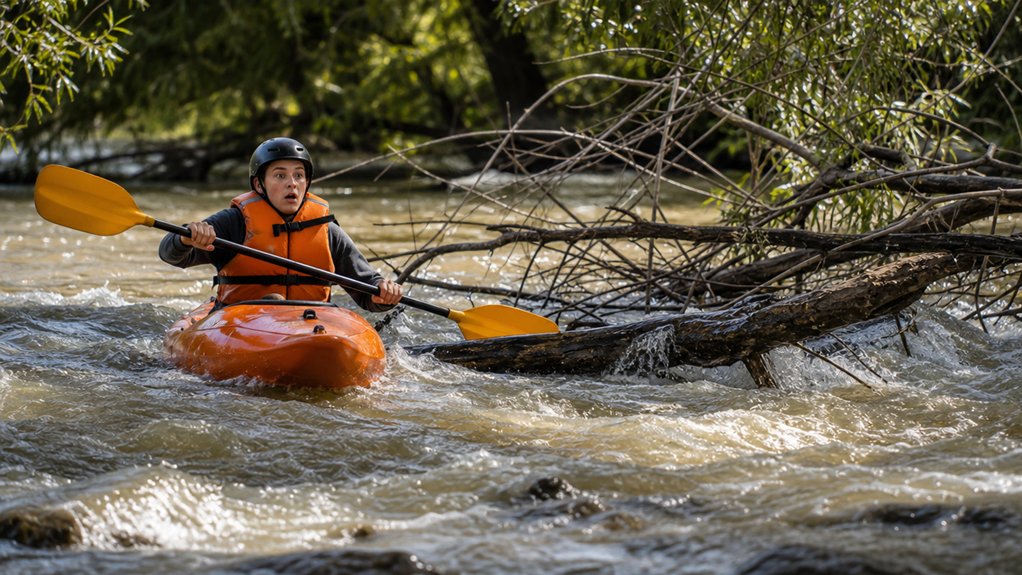
Knowing how to adjust your paddle strokes in moving water is only half the battle. River hazards can end your run fast if you’re not watching.
Watch for these dangers:
Learning how to keep your eyes downstream saves trips, and possibly your life.
If you don’t have one yet, you can find throw bags for kayak rescue on Amazon.
Everything you do before you get on the water determines how your first river trip goes.
Preparation isn’t glamorous, but it’s what keeps your kayak trip fun instead of frightening.
Before hitting moving water for the first time, lock in these four essentials:
Freedom starts with smart preparation.
If you need to pick one up before your trip, you can compare whitewater kayak helmets on Amazon.