Physical Address
304 North Cardinal St.
Dorchester Center, MA 02124
Physical Address
304 North Cardinal St.
Dorchester Center, MA 02124
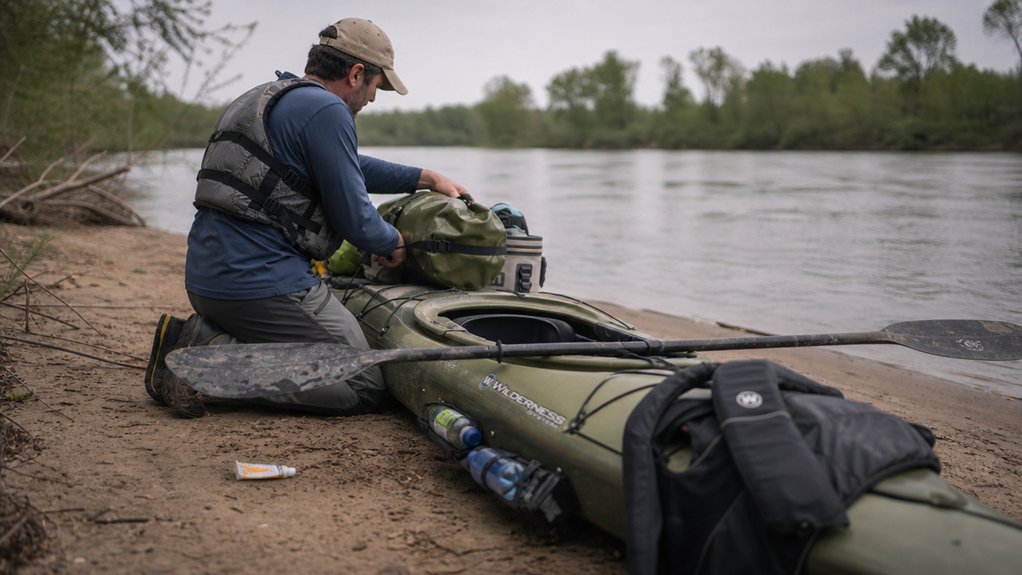
Most people load a kayak the same way they pack a car trunk. On open water with a headwind, a poorly loaded boat is a different problem.
This post contains affiliate links. We may earn a small commission if you purchase through these links, at no extra cost to you.
Most people load a kayak the same way they pack a car trunk. Everything in, lid closed, figure it out when you get there.
On a calm lake that works fine. On open water with a headwind building, a poorly loaded kayak becomes a different problem entirely.
Getting the weight right before you launch takes ten minutes. It changes how the boat handles for the entire day.
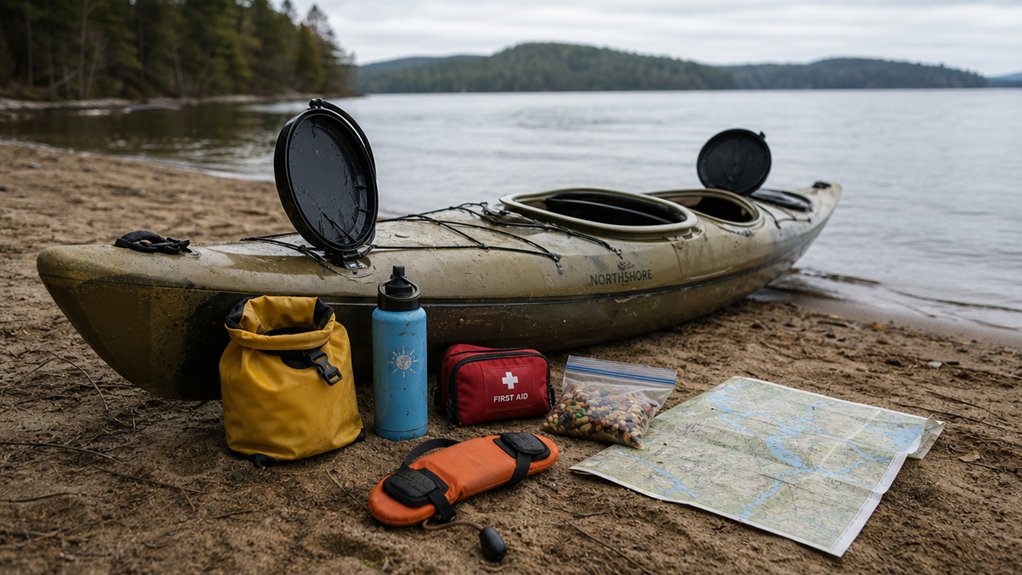
A full-day kayak trip demands more than just tossing a granola bar and a water bottle into your boat.
You’ll need gear that keeps you safe, fed, and free to explore without worry.
Pack 2-3 liters of water, high-calorie snacks at 200-300 calorie intervals, and a waterproof first aid kit.
A 120+ dB whistle handles emergency signaling when your voice won’t carry.
Bring waterproof maps and a compass, because even solid paddling techniques won’t help if you’re heading the wrong direction. For remote routes, a personal locator beacon adds a critical layer of safety when cell service is unavailable. Combining kayaking with overnight camping trips requires additional planning for multi-day water routes.
Don’t forget sunscreen, a spare paddle, and dry bags for everything else. Always wear a Type III PFD while on the water, as it provides the buoyancy and freedom of movement best suited for kayaking.
Roll-top dry bags in multiple sizes — a 5L for electronics, a 20L for clothing — give you a modular waterproofing system that fits the tapered compartments of most touring kayaks. If you need to pick some up before your trip, you can find options on Amazon.
Canadian waterways come with their own set of legal requirements that go beyond a well-stocked snack bag.
PFD Regulations
You’ll need a Transport Canada approved PFD, Type 1, 2, or 3. Type 3 offers the best mobility for paddling while providing 15.5+ pounds of buoyancy.
Transport Canada regulations apply to all Canadian waterways including provincial park lakes, rivers, and coastal paddling routes.
Check yours annually and replace it every 5–10 years.
Your PFD has a shelf life. Remember to inspect it every year.
Emergency Communication
Pack a whistle (three short blasts signals distress) and consider a personal locator beacon, which transmits your position to rescuers via satellite.
A registered PLB requires no subscription, activates with a single switch, and is the most reliable emergency communication option beyond cell range. Worth checking what’s available — Amazon carries a range of options.
A marine VHF radio connects you directly to Coast Guard stations. Organizing your emergency communication devices strategically in your kayak ensures they’re accessible during an urgent situation.
These aren’t suggestions, they’re your ticket to paddle freely and legally. You’re also legally required to carry a buoyant heaving line of at least 15 metres on board your kayak.
If you’re paddling in national park waters such as the Bow River in Banff, you’ll also need an AIS Prevention Self-certification Permit for your non-motorized watercraft before launching.
While safety gear keeps you legal on the water, the right snacks keep you fueled and functioning. Pack shelf-stable options like beef jerky (7-10g protein per serving), trail mix, and whole grain crackers with nut butter for sustained energy over 3-4 hours.
Bananas hold up for 6-8 hours in moderate temps. Dried fruit is also a smart choice since it’s compact, lightweight, and energy-dense compared to fresh alternatives. Muesli or power bars also make reliable energy boosts to keep you going between meals on the water.
Skip mayo-based sandwiches and deli meats, they breed bacteria within hours.
For drinks, hydration bladders with bite valves let you sip hands-free while paddling. Add electrolytes to your water and plan 475–950 ml (16–32 oz) per 2–3 hours on the water.
Just as responsible trail practices ensure safety for outdoor adventures, proper hydration planning prevents dehydration sneaks up fast.
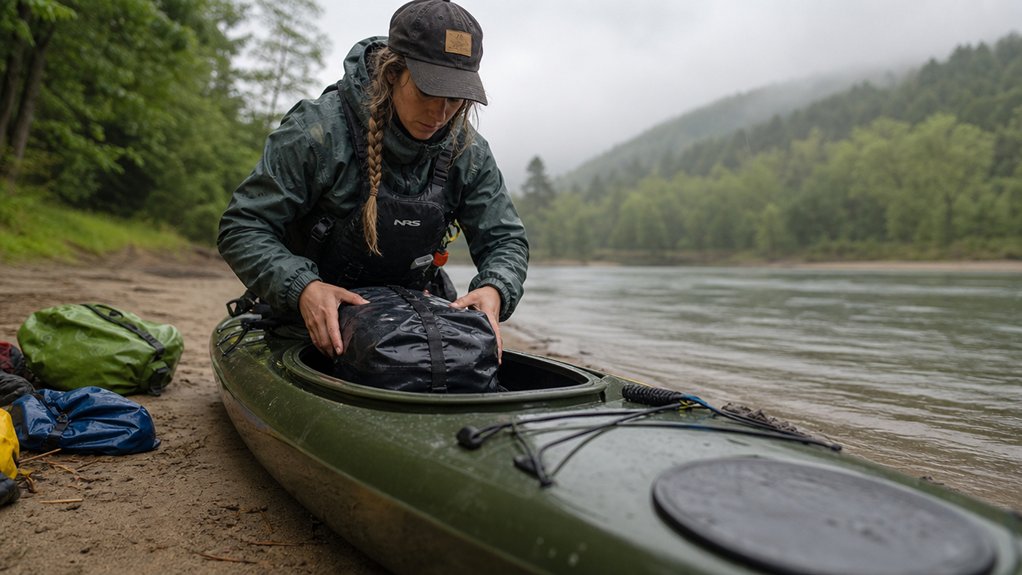
Before heading out, rock your kayak gently in shallow water.
It should snap back to center quickly. To achieve this, load heavy items low and close to the cockpit to maximize stability.
Place lighter items toward the ends of the kayak to help maintain proper trim and balance. Proper portaging techniques will also help you manage weight distribution when packing for longer trips.
Slow recovery? Redistribute and retest.
Three layers of protection stand between your gear and a soaked disaster: the right containers, smart packing techniques, and proper sealing.
On Canadian lakes and rivers, where conditions can change quickly and portages may mean gear gets handled roughly, those three layers are worth taking seriously.
Your waterproof techniques start with choosing the right dry bags, then layering defenses so you’re free to paddle without worry. For critical items, divide gear by wet sensitivity and use multiple layers of water protection to guard against prolonged exposure.
Layered waterproof protection keeps your gear dry so you can focus on the paddle ahead.
Pre-cool gear before packing to reduce condensation from temperature differences.
Choose fold-down coated nylon dry bags with the waterproof coating inside and slippery nylon outside, which makes them easier to slide through tight hatch openings.
Before heading out on the water, familiarize yourself with paddling techniques to ensure confident control of your kayak while managing your gear.
A well-packed kayak does not guarantee a good day on the water. But a poorly packed one can end it early.
Run through the basics before you launch. Weight centred and low. Critical gear within reach. Dry bags sealed and tested. PFD on, not stowed.
Canadian lakes and rivers reward the paddler who shows up prepared. The ones who do not usually figure that out somewhere inconvenient.