Physical Address
304 North Cardinal St.
Dorchester Center, MA 02124
Physical Address
304 North Cardinal St.
Dorchester Center, MA 02124
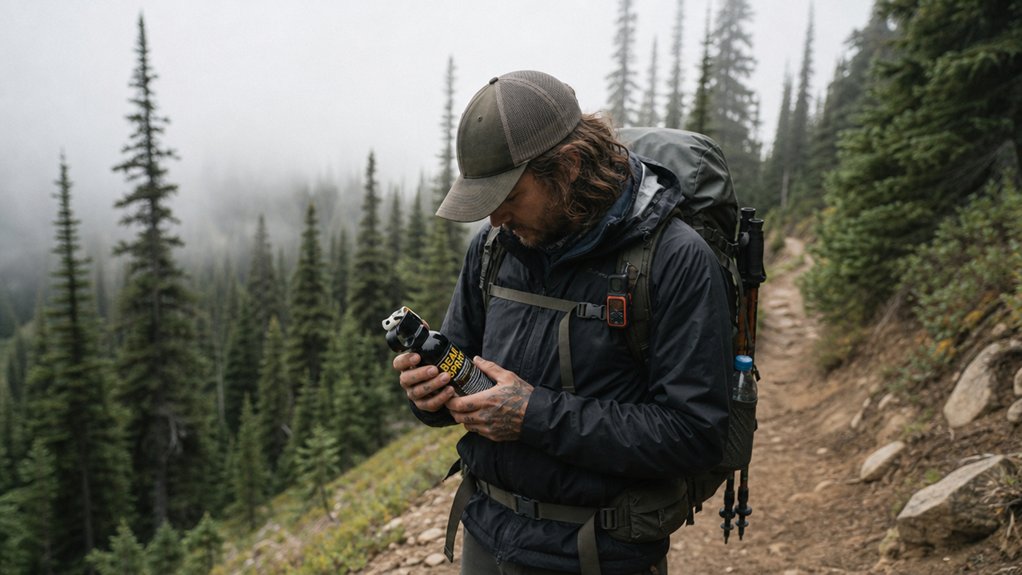
Canada's bear safety advice treats all bears as the same problem. They are not, and the difference matters on trail.
This post contains affiliate links. We may earn a small commission if you purchase through these links, at no extra cost to you.
Most bear safety advice treats all bears as the same problem.
They are not.
In Canada, hiking safety in bear country means two separate conversations. One is about black bears, which live in every province and territory and are what the vast majority of Canadian hikers will ever actually see. The other is about grizzlies, which are regionally specific and require a meaningfully different response.
Knowing which bear lives where you hike is the single most useful thing you can learn.
Everything else builds from that.
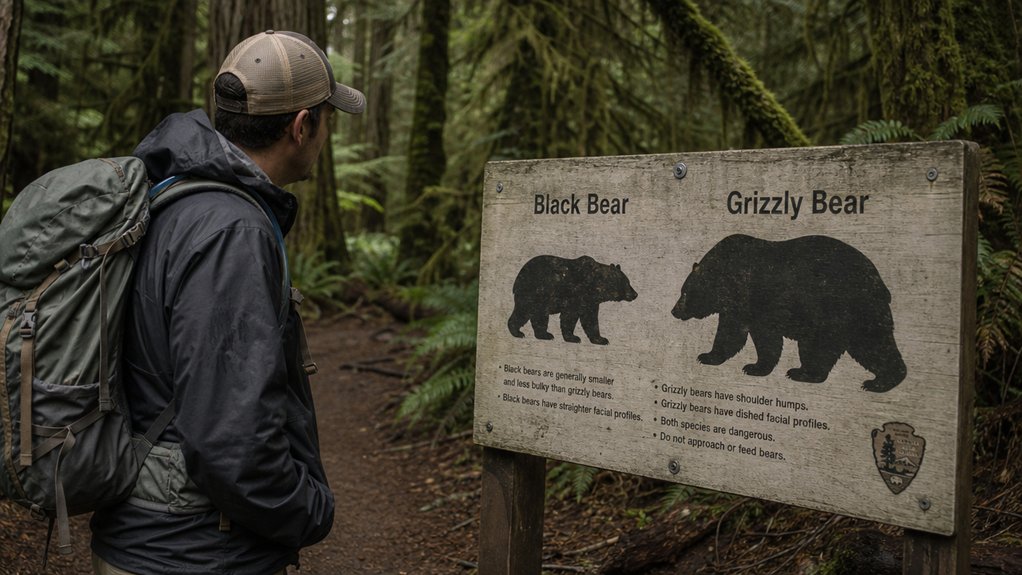
You may not always know which bear territory you are entering. Knowing what to look for helps.
Grizzly bears have a prominent muscular hump above the shoulders. Their face profile is dished, meaning it curves inward between the forehead and the snout. Their ears are short and rounded. Their front claws are approximately 4 inches long and often visible in tracks as long, straight marks ahead of the toe pads.
Black bears have no shoulder hump. Their face profile is straight, almost Roman-nosed. Their ears are taller and more pointed. Their claws are shorter and more curved, leaving tracks where the claw marks sit close to the toes.
One thing that trips people up: size alone is not reliable. A large black bear and a small grizzly can overlap significantly in size. Look at the hump and the face, not just how big the animal is.
If you are unsure, treat the bear as a grizzly until you have reason to think otherwise.
Canada has both species, but their ranges do not overlap everywhere.
Black bears are present in every province and territory in Canada. They live in Ontario’s boreal forests, in the hardwoods of New Brunswick, on Vancouver Island, in parts of the Yukon, and in suburban edges from Kelowna to Sudbury.
If you hike anywhere in Canada, you are in black bear range.
Grizzlies are a different situation. In Canada, they live primarily in:
If you are hiking in Ontario, Quebec, the Maritimes, or Newfoundland, you will not encounter a grizzly.
If you are hiking in the Rockies, interior BC, or the territories, you might.
The national parks of Banff and Jasper sit squarely in grizzly range. If hiking in Canadian national parks is on your list, grizzly awareness is part of the preparation.
Parks Canada advises all visitors to grizzly habitat to carry bear spray and treat every trail as potential bear habitat, regardless of how well-travelled it is.
Food is the primary attractant in most encounters, which makes proper food storage in Canadian bear country worth understanding before anything else. The most persistent myth, though, is that bears are looking for you.
They are not.
The Canadian Wildlife Federation notes that the vast majority of bear encounters happen because a bear was surprised at close range. Usually this happens on a trail where vegetation or noise from water masked the hiker’s approach. The bear reacts to the surprise. It is not hunting.
A few things that genuinely increase encounter risk:
And a few things that matter less than most people assume:
Research on bear behaviour consistently shows that most encounters are defensive, not predatory. A bear that stands up is usually trying to see or smell you better, not preparing to charge.
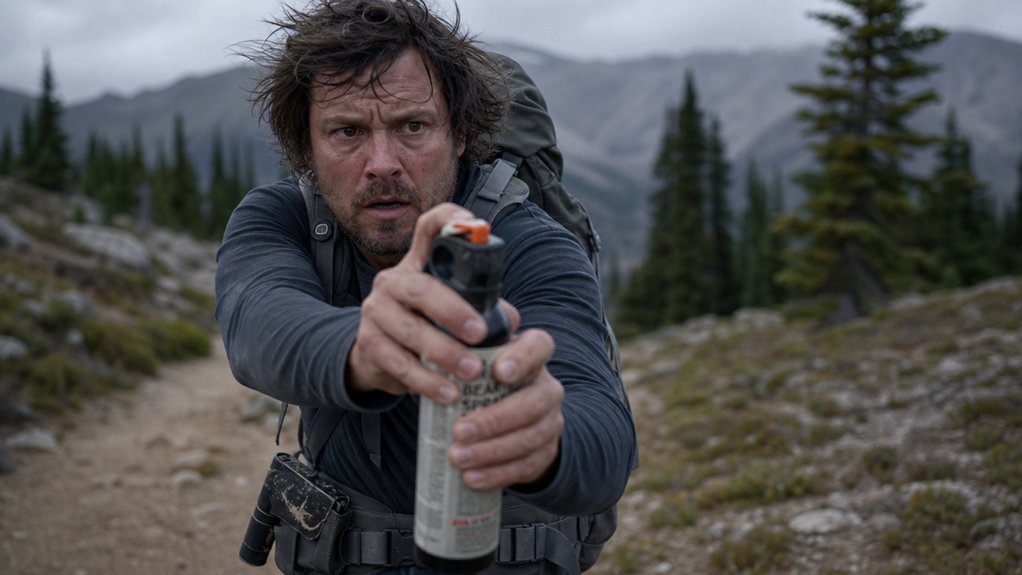
Knowing what to look for before an encounter develops is also worth studying — there is a full guide to reading wildlife signs on Canadian trails that covers tracks, scat, and claw marks. When it comes to the encounter itself, bear spray is the most effective tool a hiker carries.
Look for a canister with a minimum 225g capacity and a spray duration of at least 7 seconds — those are the specs Parks Canada references in its recommendations. If you need to pick one up before your trip, you can compare options on Amazon.
Studies in peer-reviewed wildlife journals have found it more effective than firearms at stopping aggressive bear behaviour. Success rates exceed 90 percent when the spray is used correctly.
Correct use is the key phrase.
Things that matter more than most people realise:
Do not spray your tent or gear as a deterrent. It does not repel bears and may attract them.
The correct response depends on which bear you are facing and whether it is acting defensively or predatorily.
This is where the two-species distinction becomes important.
Most black bear encounters on trail are surprise encounters at close range. The bear is usually as startled as you are.
What to do:
The key distinction: if an attack continues past initial contact, it is likely predatory. Do not play dead.
Grizzly encounters require a different calculation.
Wildlife experts recommend reviewing this response before any trip into grizzly country. Reading it once is not the same as knowing it under stress.
Bear encounters are rare.
Injuries are rarer still.
The hikers who run into trouble are usually unprepared: they startled a bear at close range with no noise-making habit and no accessible bear spray. Fixing those things takes about ten minutes before a trip.
Carry your spray, make noise on the trail, and know which bear lives where you are going. Whether you are exploring some of Canada’s great hiking routes or heading into mountain backcountry for the first time, those three habits will cover most of what can go wrong.
The trail is worth it.
The bears are part of what makes it feel real.