Physical Address
304 North Cardinal St.
Dorchester Center, MA 02124
Physical Address
304 North Cardinal St.
Dorchester Center, MA 02124
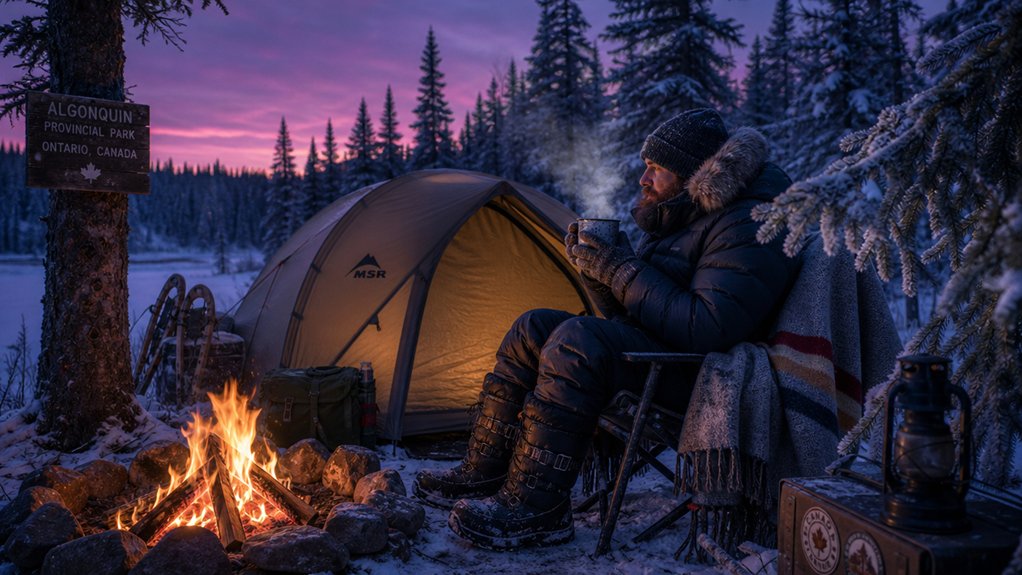
Staying warm while camping in Canada is mostly about layering right and keeping moisture out. Small habits before bed make a big difference overnight.
This post contains affiliate links. We may earn a small commission if you purchase through these links, at no extra cost to you.
Waking up shivering at three in the morning is its own kind of misery. You’re tired, your sleeping bag feels thin, and you don’t quite know what went wrong because you were warm when you got in. Most cold nights in a tent aren’t about bad luck or bad gear. They’re about one or two fixable mistakes stacking up.
Staying warm while camping in Canada is less about having expensive equipment and more about understanding how heat loss actually works. The ground takes more from you than the air does. Moisture undoes insulation faster than cold does. And a few small habits before you get into your bag can make the difference between a good night and a rough one.
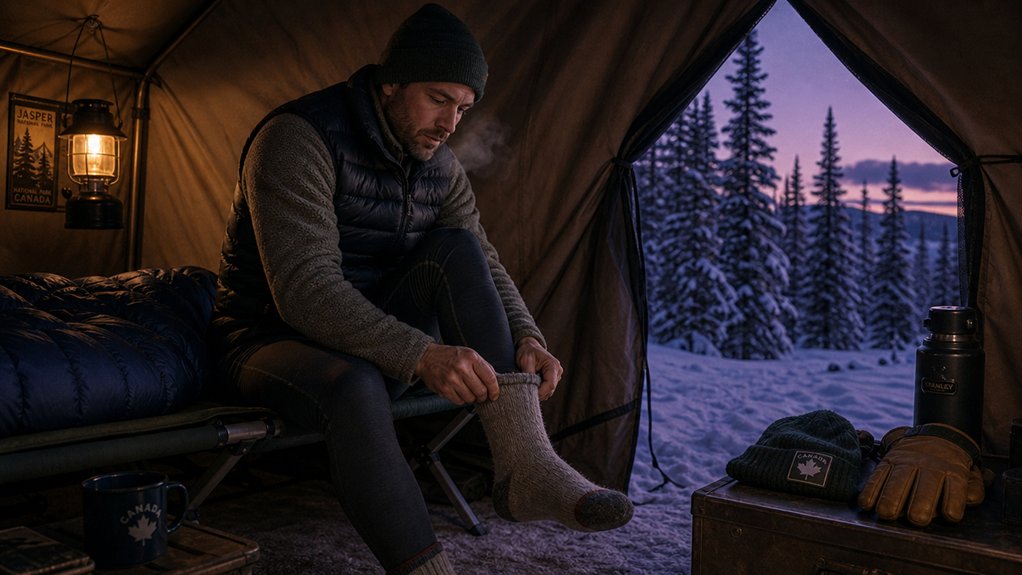
Before you climb into your sleeping bag, what you’re wearing matters just as much as the bag itself. Layering correctly keeps insulation working and prevents heat loss before it starts.
Skip cotton entirely; it holds moisture and chills you fast.
A fleece liner adds up to 5–8°C (10–15°F) of extra warmth, making it a smart upgrade for any serious camping trip. Pairing your layering strategy with a sleeping bag that has the right temperature rating for Canadian conditions ensures you’ll stay comfortable even in harsh winters.
Proper ground insulation is one of the most critical essential camping tips for maintaining body heat throughout the night.
Simple setup. Serious freedom.
If you still need one for your trip, you can compare insulated sleeping pads on Amazon.
Condensation sneaks up on you, one minute your sleeping bag feels fine, and by 3 a.m. it’s damp and losing warmth fast.
Keep tent vents open and partially unzip your door to maintain airflow and push moisture out before it settles. Tighten attachment points so cold air gaps stay minimal, preserving a warmer interior.
Don’t let your sleeping bag touch the tent fly; that contact transfers moisture directly. Lay a ground tarp underneath to block ground dampness.
Choose breathable tent materials that balance ventilation with insulation, keeping condensation manageable without sacrificing heat.
Proper food storage techniques also prevent moisture-attracting odors from accumulating in your tent, which can worsen condensation buildup overnight.
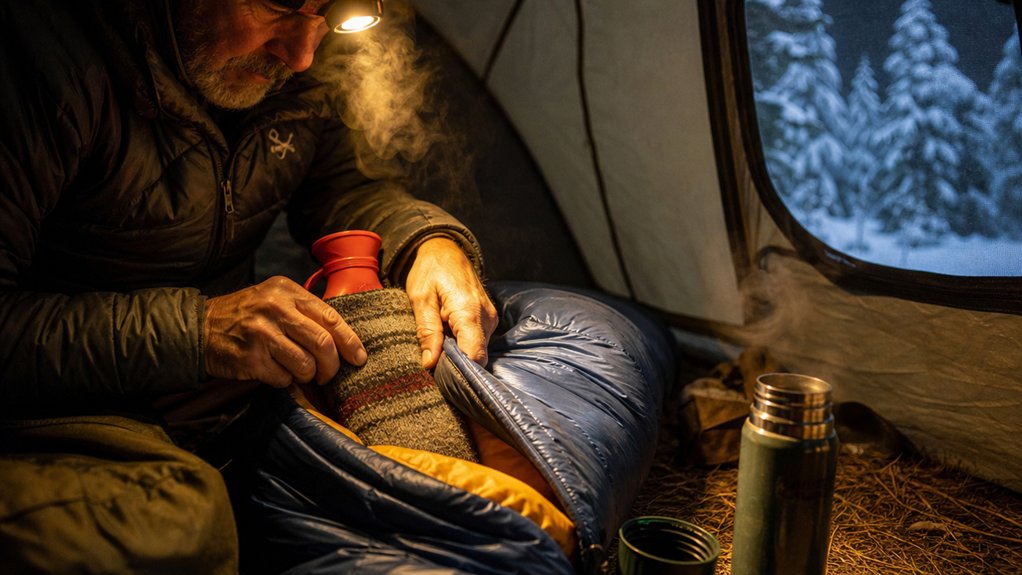
One of the oldest camping tricks in the book costs almost nothing and works surprisingly well: fill a durable bottle with warm water and slip it into your sleeping bag before bed.
For better heat retention, place it near your feet or between your legs, areas that tend to lose heat quickly in cold conditions.
Use an insulated or well-sealed bottle to reduce the risk of leaks or burns.
It’s a simple way to stay warmer in your tent on cold nights.
If you need one, you can browse insulated hot water bottle options on Amazon.
Waking up shivering at 2 AM is miserable, but you can recover fast if you act immediately.
First, zip your sleeping bags fully and cinch the drawstring around your face; you’re losing serious body heat through that gap.
Next, change into dry, insulated clothing if you’re damp; moisture kills warmth faster than cold air ever will.
Check your sleeping pad, because without proper insulation it provides, the ground drains your heat constantly.
Add layers underneath if needed.
Use deep breathing techniques to calm down and generate additional warmth naturally.
You’ll feel warm again within minutes.