Physical Address
304 North Cardinal St.
Dorchester Center, MA 02124
Physical Address
304 North Cardinal St.
Dorchester Center, MA 02124
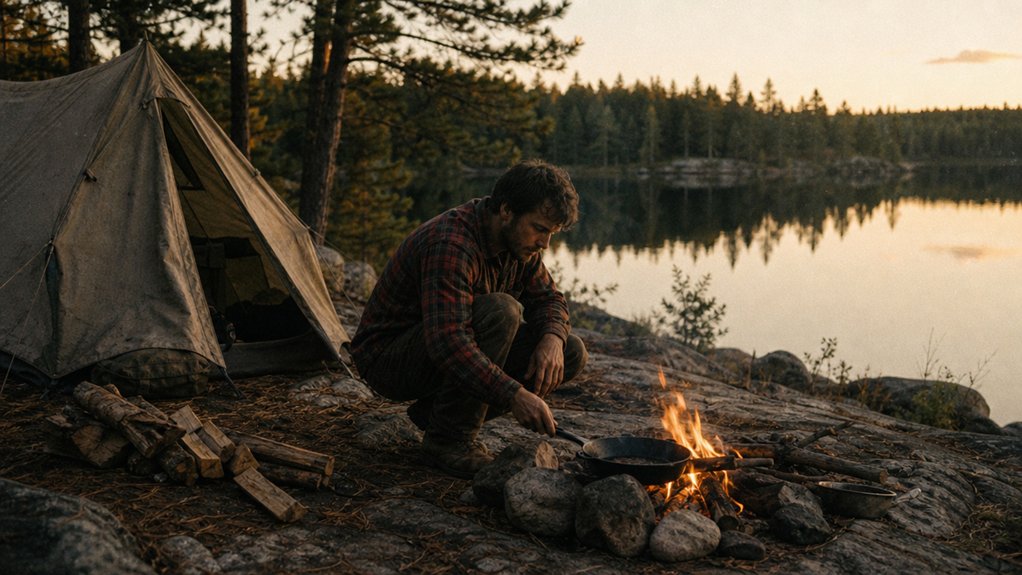
The first camping trip tends to go one of two ways. The difference between them is almost always planning, and planning is the easy part.
This post contains affiliate links. We may earn a small commission if you purchase through these links, at no extra cost to you.
The first camping trip tends to go one of two ways. You show up prepared, get your tent pitched before dark, and wake up to a solid morning. Or you forget something important, realize it at the campsite, and spend the weekend improvising.
Canada has some of the best beginner camping on the continent. Provincial parks within two hours of most major cities offer marked sites, maintained trails, and infrastructure that makes the first trip forgiving.
Three companion guides cover the gear side in detail: how to choose a sleeping bag for Canadian camping, how to stay warm while camping in Canada, and how to pack and store food for a Canadian camping trip. The planning part is what most people underestimate. It is not complicated, but it does need to happen in the right order.
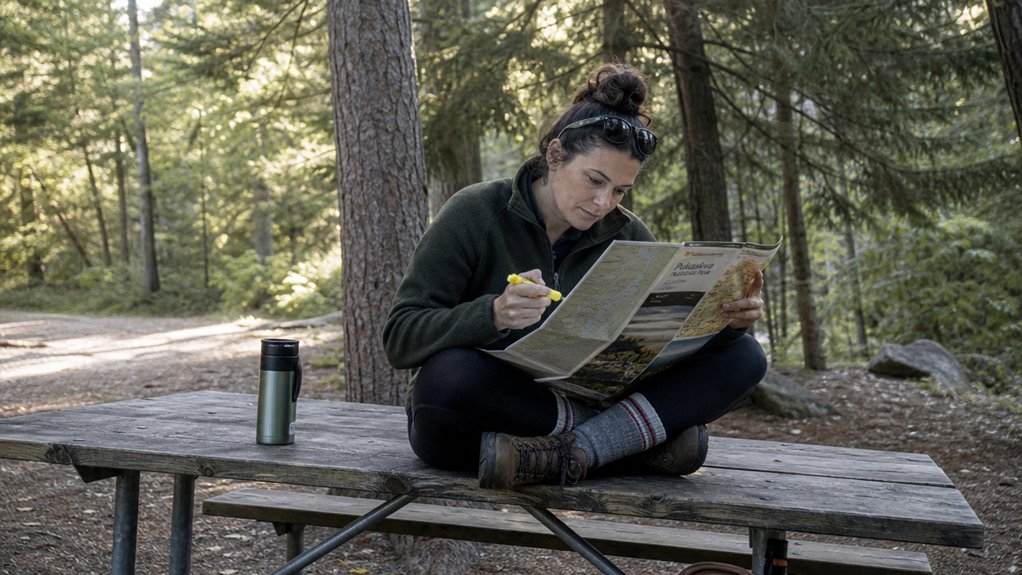
How do you choose the right campground when Canada offers thousands of options across every province and territory? Start by understanding campground types: private sites run $25–$60 CAD nightly with WiFi and full hookups, while provincial parks offer natural settings for $15–$45 CAD. National parks split the difference.
Next, consider your location factors. Southern British Columbia and Eastern Ontario pack the highest concentration of beginner-friendly spots within 2–4 hour drives of major cities. Many provincial parks require advance booking reservations to secure your preferred dates and campsites.
You’ll want flat terrain, established trails, and water access. Roughly 60% of Canadian campgrounds deliver that last one.
Parks Canada also offers a Learn-to Camp program with resources covering everything from packing checklists to campfire basics, making it easier for first-timers to prepare. When evaluating specific sites, look for east-facing positions that catch morning sun to dry dew and warm your campsite early in the day.
Before you pack a single bag, you’ll want to nail down your budget, because Canadian camping costs range from surprisingly cheap to “wait, how much?” depending on your choices.
Campsite fees across Canada run $26–$160 CAD/night, so knowing what type of site you need helps you plan accurately.
Smart reservation strategies make all the difference. Book provincial parks 2–6 months ahead, especially for July–August trips. If your preferred site isn’t available, you can sign up for availability notifications that alert you by email when a matching site opens up.
Understanding campground amenities and facilities will help you choose sites that match your comfort level and budget.
Here are key cost saving tips to stretch your dollar:
Although your budget and reservations set the foundation, the gear you bring determines whether you’ll actually enjoy sleeping outdoors.
Tent Selection
Pick a three-season tent with a floor waterproof rating of 1500mm+ and a fly rated 3000mm+.
A two-person three-season tent in the 2–2.5 kg range hits the practical balance between packable weight and liveable interior space for a Canadian provincial park trip. If you need to pick one up before your trip, you can compare options on Amazon.
Your tent’s waterproof ratings aren’t just specs—they’re what stand between you and a miserable, soggy night outdoors.
Add a ground tarp, it’ll extend your tent’s lifespan by 2-3 years.
Cooking Essentials
You’ll need a camp stove with propane or butane canisters, a lightweight cookware set, and a cooler holding ice 24-48 hours.
A single-burner canister stove that screws directly onto a standard propane/butane canister is the most reliable starting setup for car camping and short portages alike. Worth checking what’s available — Amazon carries a range of options.
In most Canadian parks, bear canisters or bear bags aren’t optional, they’re mandatory.
Consider pairing your camping trips with kayaking Canadian waterways to maximize your wilderness experience.
Clothing Layers
Skip cotton. It traps moisture and invites hypothermia.
In Quebec’s Laurentians or along the BC coast, where rain is frequent and overnight temperatures can drop unexpectedly even in summer, wool and synthetic layers earn their weight on every trip.
Pack a well-stocked first aid kit with bandages, ointments, personal prescriptions, and health cards so you’re prepared for minor injuries on the trail.
Always pack biodegradable shampoo and soap and dispose of them in designated sinks rather than lakes or rivers.
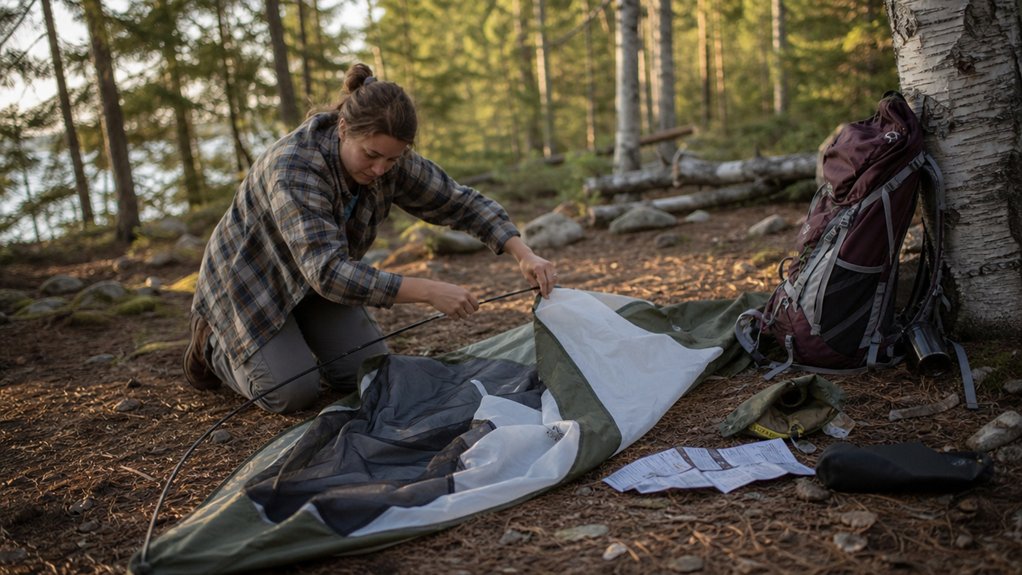
Having the right gear packed and ready means nothing if you pitch your tent in the wrong spot.
Where and how you set up camp matters just as much as what you brought, and a few smart choices during setup can mean the difference between a solid night’s sleep and a miserable one. Practicing your tent setup at home before heading out helps you avoid frustrating mistakes and wasted time at the campsite.
Good site selection and tent orientation keep you comfortable and safe:
In Alberta and British Columbia, these spacing requirements are actively enforced in areas with high wildlife activity.
Always check local fire ban rules before setting up your campsite to ensure you’re following regional regulations. Place a tent footprint or tarp underneath your tent for ground protection, but make sure it’s slightly smaller than the tent so it doesn’t collect and pool rainwater around your sleeping area.
Even seasoned campers look back on their first trips and cringe at the mistakes they made, and most of those mistakes are entirely preventable.
Weather preparedness tops the list. Canadian nights drop fast, even in July. Check forecasts 48 hours out and pack waterproof layers; they prevent 90% of weather-related misery. Winter camping requires additional insulation and specialized winter gear to maintain body heat in freezing temperatures.
Next, nail your gear essentials by cutting the extras. Beginners pack 40-50% more than they’ll use. That dead weight kills your energy and shaves roughly 35% off your enjoyment. Always test new gear at home before departure to ensure everything functions properly.
Don’t forget permits either. Fines run $100–$500 CAD, and peak weekends hit 80% occupancy. Book ahead; freedom favors the prepared. Aim to arrive by mid-afternoon so you can set up comfortably and secure the best spot before sunset.
Most first camping trips go better than expected. The ones that don’t usually come down to one thing left unprepared: the site wasn’t booked, the tent was untested, the forecast wasn’t checked.
Handle those three things in advance and the rest takes care of itself. Canada’s provincial parks are well-maintained and genuinely welcoming to beginners. The infrastructure is there. The only thing left is to go.
Pick a site within a few hours of home, book it, and pack for the weather forecast. Assume the overnight temperature will be five degrees colder than predicted. That’s the whole plan.